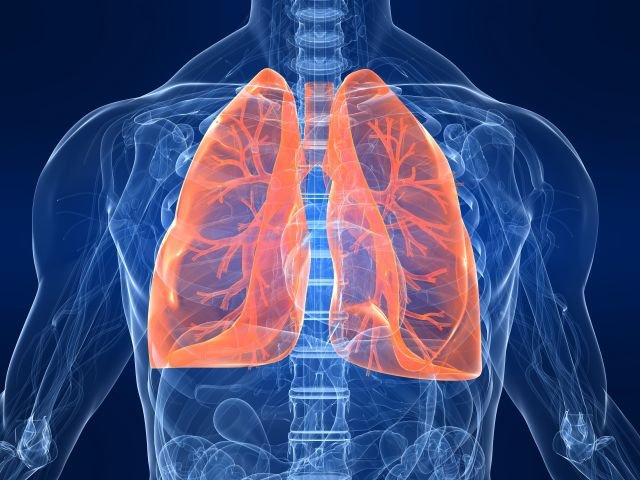
Pneumoconiosis: What You Need to Know About “Dust Lung”
How Does Dust Hurt Your Lungs?
Imagine breathing in invisible dust every day for years. If you work in a mine, a stone cutting shop, or a construction site, that’s exactly what can happen.
When you inhale these tiny dust particles — much smaller than a grain of sand — they go deep into your lungs. Your lungs have special “cleaner cells” called macrophages. They try to eat the dust and remove it. But if there is too much dust, these cells get overwhelmed and die. Over time, the dead cells and dust build up, causing inflammation (swelling inside the lung).
To protect itself, your body tries to wall off the dust by growing scar tissue. This scar tissue is stiff and thick, like a piece of old leather. Unlike a cut on your skin that heals, scar tissue in the lungs never goes away. It makes your lungs less stretchy, so they can’t fully expand when you breathe in. As a result, less oxygen gets into your blood, and you feel short of breath.
If the dust comes from coal, your lungs may turn black — that’s “black lung disease.” If it’s silica (found in stone, sand, concrete), the scars are small round nodules that slowly grow together. If it’s asbestos (once used in building materials), the fibrosis usually starts at the bottom of the lungs and can also cause cancer later.
|
Who Is at Risk? (Jobs That Breathe Dust)Not everyone gets pneumoconiosis. It almost always happens to people who work around mineral dust for many years without proper protection. Here are the most common high-risk jobs:Job / Industry |
What Dust |
Disease Name |
|
Coal mining |
Coal dust |
Black lung (CWP) |
|
Sandblasting, stone cutting, artificial stone countertop making |
Silica dust |
Silicosis |
|
Construction (demolition, insulation), shipbuilding, old car brake repair |
Asbestos fibers |
Asbestosis |
|
Quarrying, tunnel drilling, pottery making |
Mixed mineral dust |
Mixed-dust pneumoconiosis |
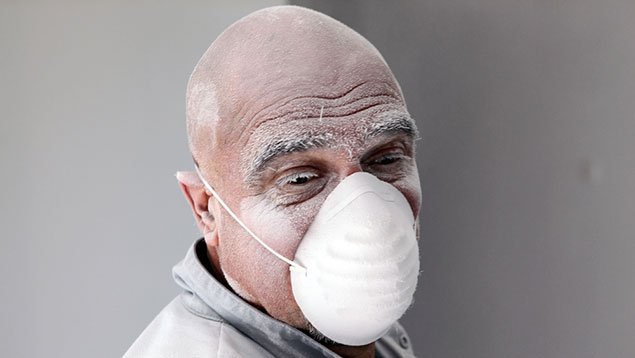
How long does it take?
For most people, symptoms start 10 to 30 years after they first breathe the dust. But if the dust is extremely heavy — like in sandblasting without a mask — a severe form of silicosis can appear in just a few months to a few years.
Who is most affected worldwide?
Pneumoconiosis is most common in low-income and middle-income countries, where dust controls are weaker. In some regions, many workers in small mines or stone workshops are diagnosed in their 40s or 50s. Men are affected more often than women simply because more men work in these industries.
Even family members can get sick if workers bring dust home on their clothes. That’s why washing work clothes separately is important.
Symptoms (What You Might Feel)
In the early stage, you may feel nothing at all. That’s one reason pneumoconiosis is dangerous — it sneaks up on you.
As the disease slowly gets worse, you might notice:
- Shortness of breath— at first only when you walk fast or climb stairs. Later, even walking on flat ground or getting dressed makes you feel like you can’t get enough air.
- A dry or mild coughthat just won’t go away.
- Coughing up black or gray sputum— this is a tell-tale sign of black lung disease. The dark color comes from coal dust mixed with mucus.
- Chest tightness— like something heavy is sitting on your chest.
- Feeling very tired— because your body isn’t getting enough oxygen.
- If you have asbestosis, you may also have clubbing— your fingertips become wider and rounder, looking like small drumsticks. This happens because of long-term low oxygen levels.
When should you see a doctor?
If you work or have ever worked in a dusty job and you start feeling short of breath or coughing for weeks, do not wait. See a doctor and tell them about your work history. The earlier you stop exposure, the better your chance of slowing the disease.
Can It Be Cured? (The Tough Truth)
No, there is no cure. Once the scar tissue forms in your lungs, it stays there forever. No medicine, no surgery (except lung transplant), and no therapy can remove the scars.
The black areas are coal dust particles surrounded by scar tissue. This damage is permanent.
Image credit: CDC Public Health Image Library. Public domain.
However, that does not mean nothing can be done. Treatment focuses on managing symptoms and preventing more damage:
- Stop more dust exposure— This is the single most important step. If you still work in a dusty job, you need to move to a different position or wear a proper respirator every single day.
- Quit smoking— Smoking makes pneumoconiosis much worse and greatly increases the risk of lung cancer, especially for people with asbestosis.
- Medicines— Doctors may prescribe inhalers to open up your airways (like bronchodilators) or steroids to reduce inflammation.
- Oxygen therapy— If your blood oxygen is low, using supplemental oxygen at home can help you feel better and protect your heart.
- Pulmonary rehabilitation— This is a program with breathing exercises, gentle physical training, and education. It can improve your quality of life even if your lungs are damaged.
- Vaccinations— Get a flu shot every year and the pneumonia vaccine. Lung infections can be very dangerous for people with scarred lungs.
- Lung transplant— For a small number of patients with very severe disease, a lung transplant is possible. But it’s a major surgery, and donor lungs are scarce.

So while you cannot “cure” pneumoconiosis, you can live with it for many years if you take good care of your lungs and avoid further exposure.
The Good News: It Is Preventable!
This is the most important message: Pneumoconiosis is 100% preventable. No one needs to get this disease. Many countries have already proven that good dust control can almost wipe out new cases.
Wet methods keep dust from becoming airborne. This simple step prevents silicosis.
Image credit: NIOSH / CDC. Public domain.
A well-fitted N95 or better respirator can protect your lungs if engineering controls are not enough.
Image credit: OSHA / Department of Labor. Free for educational use.
Here’s what works — from most effective to least:
- Engineering controls (the best solution)
- Wet methods— Spray water where dust is created. Wet dust is heavy and falls to the ground instead of floating into your lungs.
- Ventilation— Use fans and exhaust systems to pull dust away from workers.
- Enclosure— Put dusty machines inside sealed rooms with separate air systems.
- Administrative controls
- Limit exposure time— Rotate workers so no one spends all day in the dust.
- Train workers— Everyone should know the dangers and how to protect themselves.
- Monitor the air— Regularly test how much dust is in the workplace.
- Personal protective equipment (PPE)
- Wear a proper respirator— Not a simple dust mask, but an N95 or higher that is fit-tested. (Beards can prevent a good seal!)
- Change and shower at work— This keeps dust from going home to your family.
- Health checks
- Pre-employment chest X-ray— Know your baseline lung health.
- Regular check-ups— X-rays and breathing tests every 1 to 3 years for at-risk workers. If early signs appear, the worker can be moved to a cleaner job before serious damage happens.
Real-world success: In the United States, coal workers’ pneumoconiosis dropped dramatically after the 1969 Coal Act required dust controls. In Western Europe, silicosis has become rare in well-regulated industries. This proves that when governments, employers, and workers work together, dust lung can be eliminated.