Breathing New Insights: How iOS (Impulse Oscillometry) is Revolutionizing Exhaled Breath Analysis
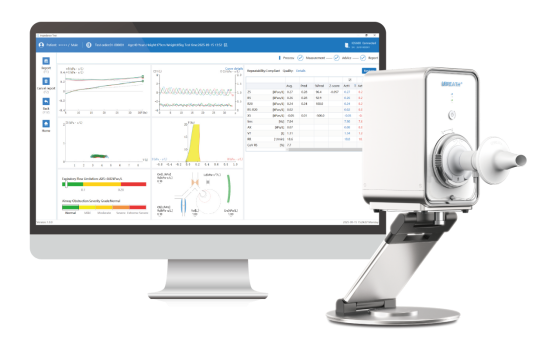
When you breathe, your lungs tell a story—one of resistance, reactance, and tiny vibrations deep within your airways. Traditionally, doctors asked patients to “blow hard and fast” into a spirometer. But what if the patient is a child, an elderly person, or someone too breathless to cooperate? Enter Impulse Oscillometry System (IOS)—a quiet, smart, and patient-friendly technology that’s changing how we measure lung health through a single breath.
What is IOS?
IOS is a non-invasive technique that uses sound waves (pulses of pressure) superimposed on normal breathing. While you sit comfortably and breathe tidally (in and out naturally through a mouthpiece), a loudspeaker-like device sends gentle impulse signals into your airway. The system then measures how those pressure waves travel back—calculating:
-
Resistance (R) – the friction air meets as it moves through your airways.
-
Reactance (X) – the elasticity and recoil of your lungs (especially small airways).
All this happens in seconds, without forced exhales or deep breaths.
IOS in Exhaled Breath Detection
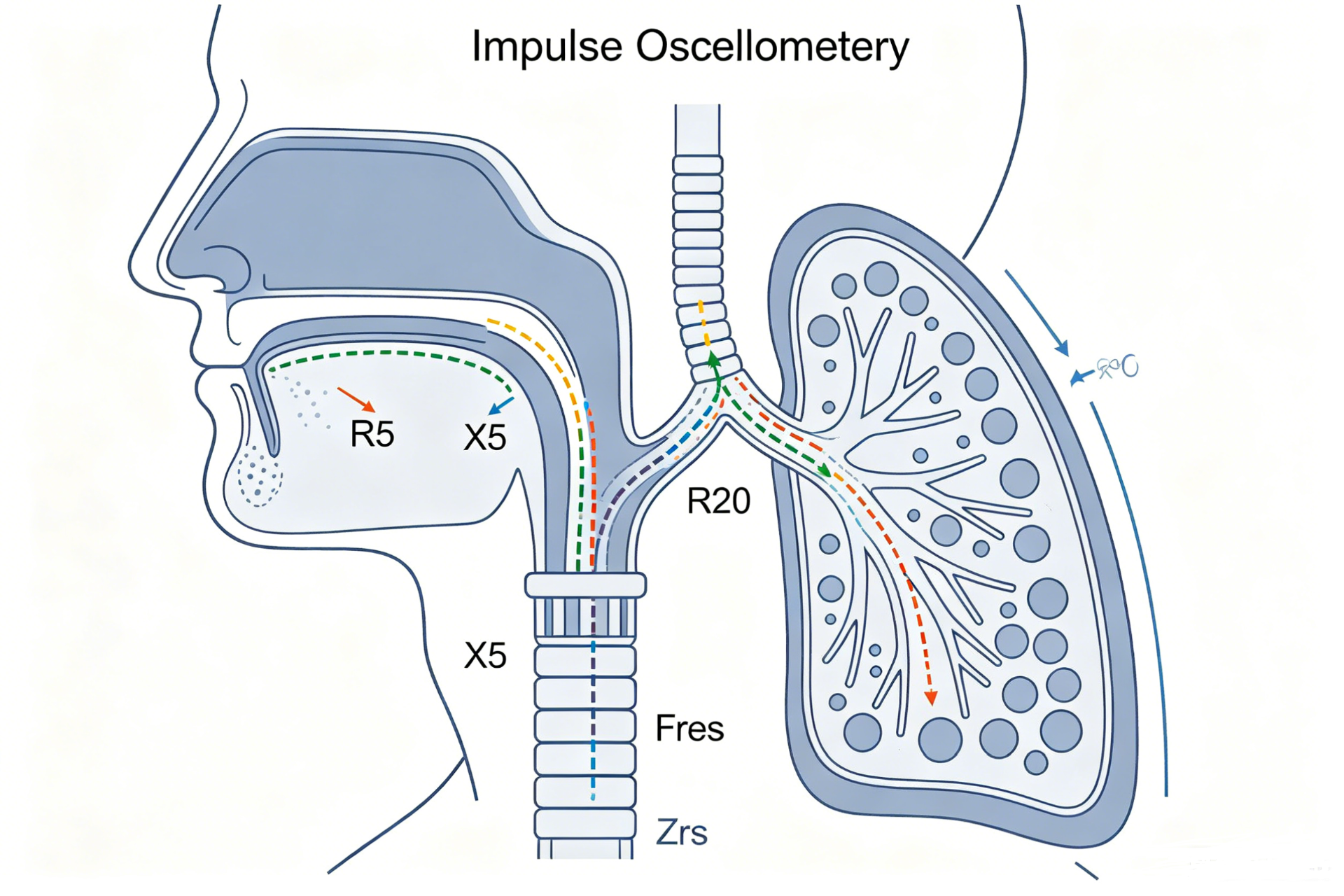
Exhaled breath carries biomarkers—nitric oxide (FeNO), volatile organic compounds (VOCs), temperature, humidity, and even particles from airway lining fluid. IOS doesn’t just analyze the gas composition; it analyzes how easily that gas moves through different parts of the lung. By measuring resistance at different oscillation frequencies (e.g., 5 Hz vs. 20 Hz), IOS can pinpoint:
-
Central airways (higher frequencies)
-
Peripheral/small airways (lower frequencies)
This frequency-dependent analysis turns your breath into a high-resolution map of airway narrowing, even before symptoms appear—ideal for asthma, COPD, or small airway diseases.
IOS vs. FOT: What’s the Difference?
Both IOS and FOT (Forced Oscillation Technique) are oscillation-based methods. They both avoid forced maneuvers. But there are key differences:
| Feature | IOS | FOT |
|---|---|---|
| Signal type | Impulse (single broad-frequency pulse) | Pseudo-random or sinusoidal (multiple discrete frequencies) |
| Speed | Very fast (< 1 second per measurement) | Slower (needs several seconds to sweep frequencies) |
| Frequency range | Typically 5–20 Hz (can go up to 35 Hz) | Often limited to lower frequencies (< 20 Hz) |
| Small airway sensitivity | Higher (good reactance measurement at low frequencies) | Moderate |
| Patient cooperation | Minimal (quiet tidal breathing) | Minimal, but breath-holding or panting may be required |
| Portability | Modern iOS devices are smaller and more portable | Often larger laboratory setups |
Why IOS Stands Out in Exhaled Breath Applications
-
Frequency is key
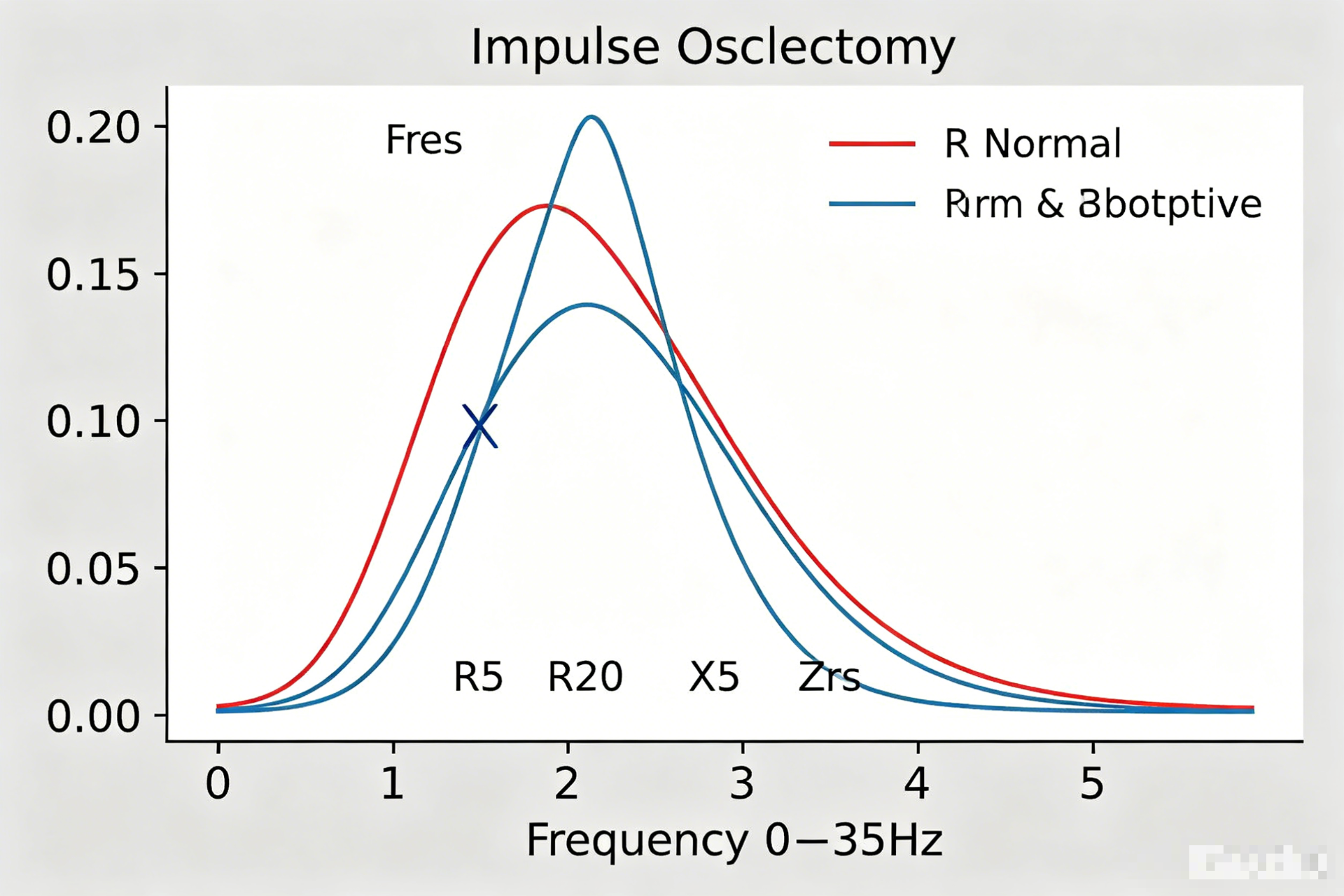
IOS delivers a full spectrum of frequencies in one impulse. That means you can measure frequency dependence of resistance – a powerful indicator of small airway dysfunction (the “silent zone” of the lung). FOT often requires frequency sweeps, missing real-time transient changes. -
Breath-by-breath variability captured
Because IOS is so fast (< 0.2 seconds per impulse), it can track changes within a single exhalation. If you want to see how exhaled nitric oxide or VOCs correlate with airway resistance at end-expiration versus mid-inspiration, IOS can do it; FOT is slower. -
Better in young children & severe patients
IOS requires only 30 seconds of quiet breathing with a nose clip. No deep breath, no forced blow. In contrast, FOT sometimes asks for a brief panting maneuver, which can be difficult for toddlers or acute COPD patients. -
Integration with exhaled breath condensate (EBC)
IOS can be combined with a collecting tube that captures exhaled breath condensate while simultaneously measuring impedance. This allows researchers to match pH, leukotrienes, or cytokines in EBC to IOS parameters like reactance area (AX). FOT setups rarely offer this integration. -
Real-time feedback during bronchial challenges
When a patient inhales methacholine or a bronchodilator, IOS detects changes in resistance within 15–30 seconds. FOT’s slower averaging can miss the early rapid response.
A Practical Example
Imagine a 6-year-old with suspected asthma. She cannot perform spirometry. FOT might manage, but if she breathes irregularly, the frequency sweep gets distorted. With IOS, a single impulse every heartbeat gives clear, robust resistance at 5 Hz (peripheral airways) and 20 Hz (central). If R5–R20 > 0.15 kPa/(L/s), small airway disease is highly likely—long before any FOT signal becomes clear.
The Future
As exhaled breath analysis moves toward personalized respiratory medicine, IOS is proving itself as the natural partner to VOC sensors, electronic noses, and nitric oxide analyzers. It adds the missing dimension: functional dynamics of airflow. FOT remains useful, but for speed, frequency resolution, ease-of-use in vulnerable populations, and seamless integration with breath biomarkers, IOS takes the lead.