Breathing New Life into Respiratory Medicine: The 2026 Breakthroughs in FeNO Research
Imagine a test so simple that a single breath can reveal the hidden inflammation brewing deep inside your lungs. That is the promise of fractional exhaled nitric oxide (FeNO)—a biomarker that has quietly revolutionized how doctors diagnose and manage asthma and other respiratory diseases. But 2026 has been a landmark year. From palm-sized home monitors to surprising discoveries about chewing gum, FeNO research is advancing at a breathtaking pace.
The Science of a Single Breath
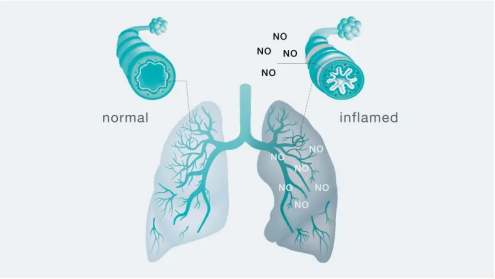
Before diving into the breakthroughs, let’s understand what FeNO actually is. When your airways become inflamed—particularly in response to allergens or irritants—the epithelial cells lining your lungs produce nitric oxide (NO) through an enzyme called inducible nitric oxide synthase. This production is driven primarily by interleukin-13, a key player in what doctors call "type 2" airway inflammation. FeNO is simply the concentration of that nitric oxide in your exhaled breath, measured in parts per billion (ppb). It is non-invasive, quick, and remarkably sensitive—a window into the inflammatory state of your lungs that was unimaginable just a generation ago.
Breakthrough #1: Smarter Sensors, Sharper Detection
Beyond portability, 2026 brought remarkable advances in sensitivity. A team of researchers developed two fluorescent probes—TBPN-1 and TBPN-2—that can detect nitric oxide with extraordinary precision. These probes achieved limits of detection as low as 8.8 nanomolar (that's billionths of a mole), and they successfully quantified FeNO in breath samples from asthma patients with results that strongly correlated with clinical analyses.
What makes this breakthrough particularly exciting is the "turn-on" mechanism: instead of the fluorescence dimming in the presence of NO (the traditional "turn-off" approach), these probes light up. This makes detection far more reliable and opens the door to real-time monitoring in living cells—not just breath samples. The implications extend far beyond respiratory medicine, potentially enabling researchers to study NO's role in everything from cardiovascular disease to neurodegenerative disorders.
Breakthrough #2: The Chewing Gum Surprise
Sometimes the most important discoveries come from the most unexpected places. In July 2026, researchers at RWTH Aachen University in Germany published a proof-of-concept study that revealed something astonishing: chewing gum affects FeNO measurements.
In a randomized trial of 30 asthma patients, those who chewed gum for 15 minutes showed a median FeNO decrease of 13%, while the control group (who didn't chew gum) showed a median increase of 7%. This statistically significant difference (p=0.001) has immediate clinical relevance. FeNO is routinely used to diagnose asthma, guide treatment decisions, and select patients for expensive biologic therapies. If a patient unknowingly chewed gum before their test, the results could be misleading—potentially leading to under-treatment or missed diagnoses. The study's conclusion is simple but vital: patients should be advised not to chew gum before FeNO measurement.
Breakthrough #3: FeNO Expands Beyond Asthma
While FeNO has been a cornerstone of asthma management for years, 2026 has seen its application broaden dramatically. A real-life study from Belgium explored FeNO in chronic obstructive pulmonary disease (COPD)—a condition where smoking has traditionally been thought to suppress FeNO levels. The study found that 37% of COPD patients had FeNO levels ≥20 ppb, suggesting that type 2 inflammation is far more common in COPD than previously recognized.
Meanwhile, a systematic review and meta-analysis published in March 2026 examined the impact of traffic-related air pollution (TRAP) on FeNO. After analyzing 48 studies, the researchers found that exposure to black carbon and polycyclic aromatic hydrocarbons was associated with the highest increases in FeNO levels. This positions FeNO not just as a diagnostic tool but as an environmental sentinel—a biomarker that can reveal the real-world impact of air pollution on respiratory health.
Breakthrough #4: Guiding the Future of Biologic Therapy
Perhaps the most clinically impactful advances of 2026 involve FeNO's role in selecting and monitoring biologic therapies for severe asthma. A narrative review published in February 2026 highlighted that high baseline FeNO levels predict better responses to certain biologics, particularly dupilumab and tezepelumab.
Real-world studies confirmed this: a Spanish multicenter study found that FeNO levels were predictive of tezepelumab's effectiveness in severe asthma patients. Another study showed that the combined baseline assessment of FeNO and blood eosinophils was associated with clinical remission at 12 months in patients treated with biologics. The message is clear: FeNO is no longer just a diagnostic marker—it is a precision tool that helps match the right patient to the right therapy.
Breakthrough #5: New Guidelines, New Standards
All this research culminated in the 2026 update of the Global Initiative for Asthma (GINA) strategy, which formally lists FeNO alongside blood eosinophils, serum IgE, and allergen sensitization as established type 2 biomarkers with diagnostic and prognostic roles. This official recognition cements FeNO's place in the standard of care and will drive further adoption worldwide.
What the Future Holds
Looking ahead, several exciting trends are emerging. Researchers are calling for personalized reference intervals rather than one-size-fits-all cutoffs. There is growing interest in "breathomics"—combining FeNO with other exhaled compounds to create a comprehensive respiratory fingerprint. And the shift from isolated measurements to longitudinal trajectory tracking promises to transform FeNO from a snapshot into a movie, revealing how inflammation evolves over time.
The year 2026 will be remembered as a turning point for FeNO. What began as a research curiosity in the early 1990s has matured into a versatile, accessible, and increasingly personalized tool that is improving the lives of millions of people with respiratory diseases worldwide. And the best part? All it takes is a single breath.