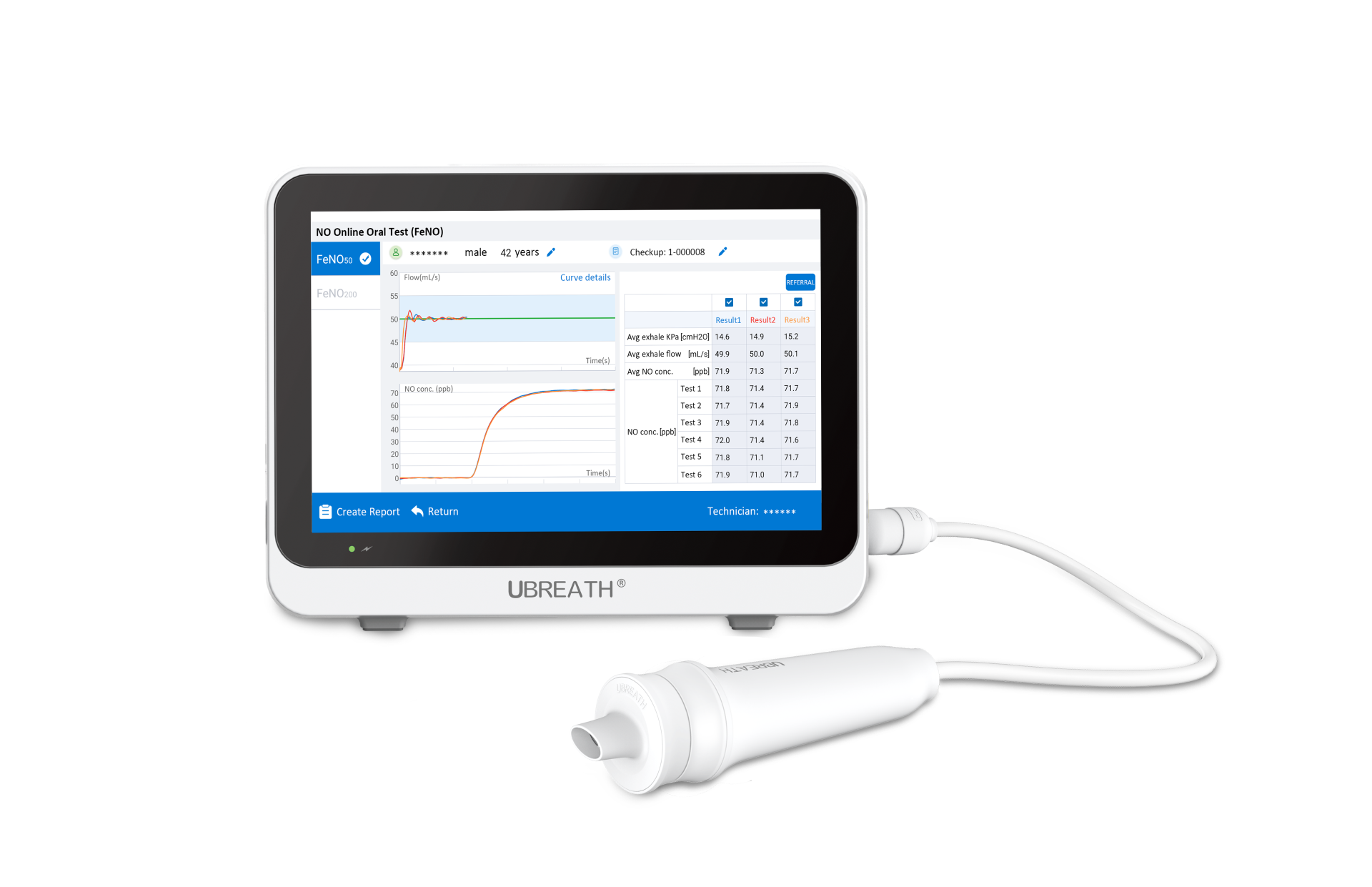
Breathe Easy: Understanding the Nasal Nitric Oxide (FnNO) Test
Have you ever wondered if there's a simple, painless way to check for inflammation in your nose and airways? There is — and it's as easy as breathing. It's called the fractional nasal nitric oxide (FnNO) test, and it's revolutionizing how doctors detect and manage respiratory conditions.
What Is FnNO?
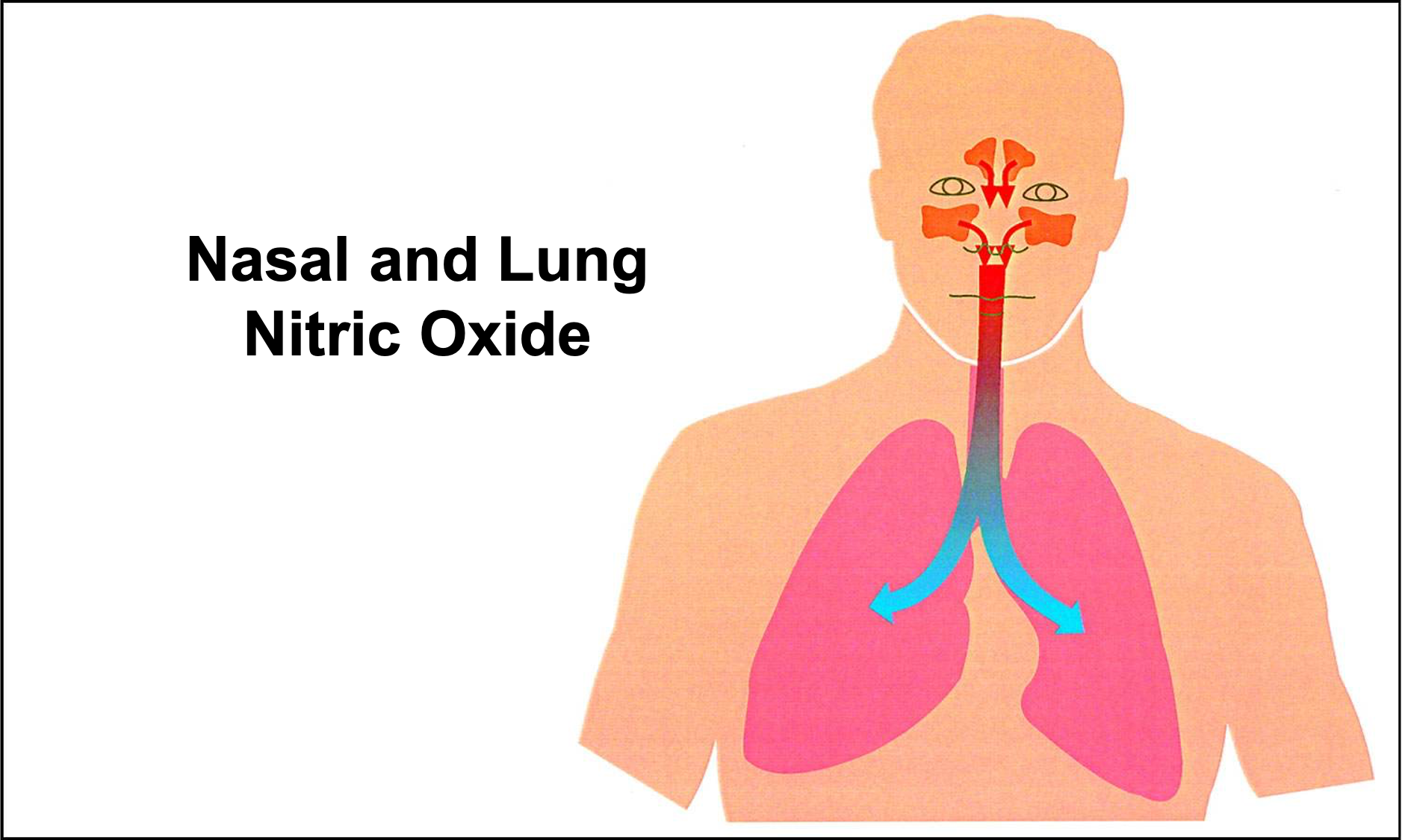
Nitric oxide (NO) is a gas naturally produced by the cells lining your nasal passages and sinuses. In a healthy state, NO levels remain relatively stable. However, when inflammation occurs — whether from allergies, infections, or other conditions — the concentration of this "signal molecule" changes.
The FnNO test measures the amount of nitric oxide in the air you exhale through your nose. Think of it as a "breathalyzer" for airway inflammation — a window into what's happening inside your upper respiratory tract.
Importantly, FnNO specifically reflects inflammation in the upper airways — the nasal cavity and sinuses — while a related test called FeNO measures inflammation in the lower airways (the lungs). FnNO is typically measured at a nasal airflow rate of 10 mL/s.
How Is the Test Done?
The FnNO test is non-invasive, quick, and completely painless. Here's what typically happens:
-
Rest: You sit quietly for about 5 minutes to stabilize your breathing.
-
Position: A soft nasal adapter is gently placed against one nostril while the other remains open.
-
Breathe: You take a deep breath in through your mouth, then exhale steadily through your nose — often by blowing gently into a mouthpiece or humming.
-
Results: The device analyzes your breath in seconds, and the report is ready within minutes.
The entire process takes just a few minutes and requires no needles, no sedation, and no recovery time.
Why Is FnNO Testing Important?
FnNO is more than just a number — it's a valuable clinical tool that helps doctors:
Diagnose allergic rhinitis (hay fever)
When FnNO levels are elevated, it often points to allergic inflammation in the nose. Higher numbers typically mean more severe inflammation.
Evaluate chronic sinusitis
In chronic sinusitis, blocked sinus drainage can actually cause FnNO levels to drop — giving doctors another clue.
Screen for rare conditions
Extremely low FnNO values can be an important warning sign for conditions like primary ciliary dyskinesia (PCD) and cystic fibrosis (CF).
Monitor asthma
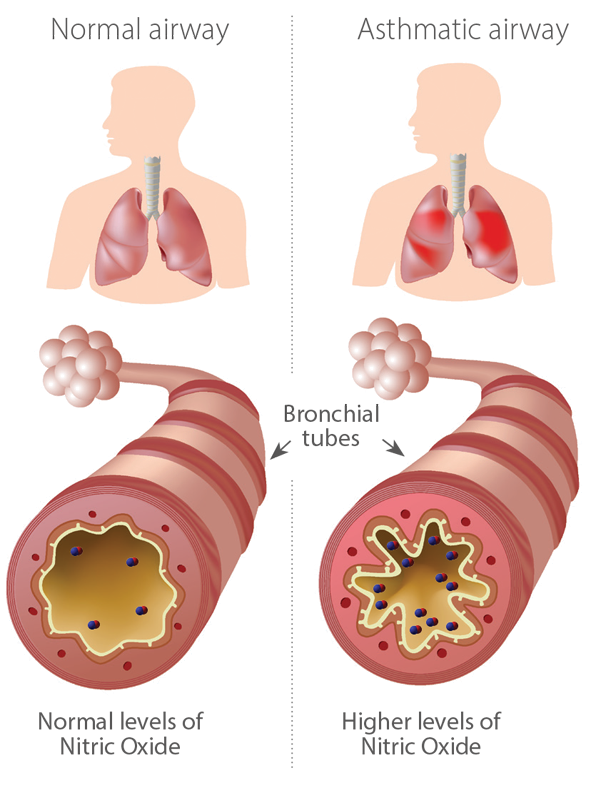
Studies show that FnNO levels tend to be higher in children whose asthma is poorly controlled. Combining FnNO with FeNO testing gives a more complete picture of airway inflammation across both the upper and lower respiratory tract.
Guide treatment
By tracking FnNO over time, doctors can see whether treatments like nasal sprays or allergy medications are working.
Who Should Consider FnNO Testing?
You or your child might benefit from FnNO testing if you experience:
-
Frequent sneezing, runny nose, or itchy nose (possible allergic rhinitis)
-
Chronic nasal congestion or sinus pressure
-
Unexplained cough or wheezing
-
A known diagnosis of asthma or allergies that needs monitoring
-
Symptoms that suggest a possible ciliary disorder or cystic fibrosis
Before Your Test: A Few Tips
To ensure accurate results, remember to:
-
Avoid eating or drinking (especially coffee, tea, and carbonated drinks) for 1 hour before the test.
-
Skip vigorous exercise and avoid allergens for 1 hour prior.
-
Avoid smoking (active or passive) for 1 hour beforehand.
-
Steer clear of nitrate-rich foods like broccoli, celery, spinach, lettuce, pickled foods, and grilled meats for 3 hours before the test.
-
Tell your doctor about any medications you've taken in the past 3 days, including steroids, antihistamines, or antibiotics.
What Do the Numbers Mean?
Normal FnNO values can vary by age and sex. For example, one large study of Chinese children aged 6–18 found an average FnNO of 454.5 ± 176.2 ppb (parts per billion), with 95% of values falling between 134.5 and 844.0 ppb.
For children aged 6–11, the predicted FnNO value can be estimated as:
FnNO = 298.9 + 18.0 × age (in years).
It's important to remember that these are reference ranges — your doctor will interpret your results in the context of your overall health, symptoms, and other test findings.
The Bottom Line
The FnNO test is a safe, simple, and powerful tool that helps uncover hidden inflammation in your nose and sinuses. Whether you're dealing with persistent allergies, chronic sinus trouble, or asthma that just won't get better, this "breath test" can provide your doctor with crucial information to guide your care.
Next time your doctor mentions checking your breath for inflammation, you'll know exactly what they're talking about — and why it matters.