Understanding FeNO and FnNO: A Guide to Breath Tests for Airway Health
Introduction
Have you ever wondered how doctors can measure inflammation inside your airways without a biopsy or a blood test? There is a simple, non-invasive way: by analyzing your breath. When you breathe out, your breath contains tiny amounts of a gas called nitric oxide (NO). The levels of this gas can tell doctors a lot about the health of your lungs and nasal passages.
This article explains two related tests: FeNO (fractional exhaled nitric oxide), which measures NO from your lungs, and FnNO (fractional nasal exhaled nitric oxide), which measures NO from your nose. Both are valuable tools for diagnosing and managing allergic airway conditions.
What is Nitric Oxide and Why is it in Your Breath?
Nitric oxide is a natural gas produced by the cells lining your airways. In healthy people, it is present at low, stable levels. However, when the airways are inflamed—particularly due to allergies or asthma—the production of NO increases significantly.
This happens because of a specific enzyme, inducible nitric oxide synthase (iNOS), which is activated during an allergic inflammatory response. When stimulated, this enzyme produces large amounts of NO, which then mixes with the air in your airways and can be measured when you exhale.
FeNO: The Lung's Inflammation Marker
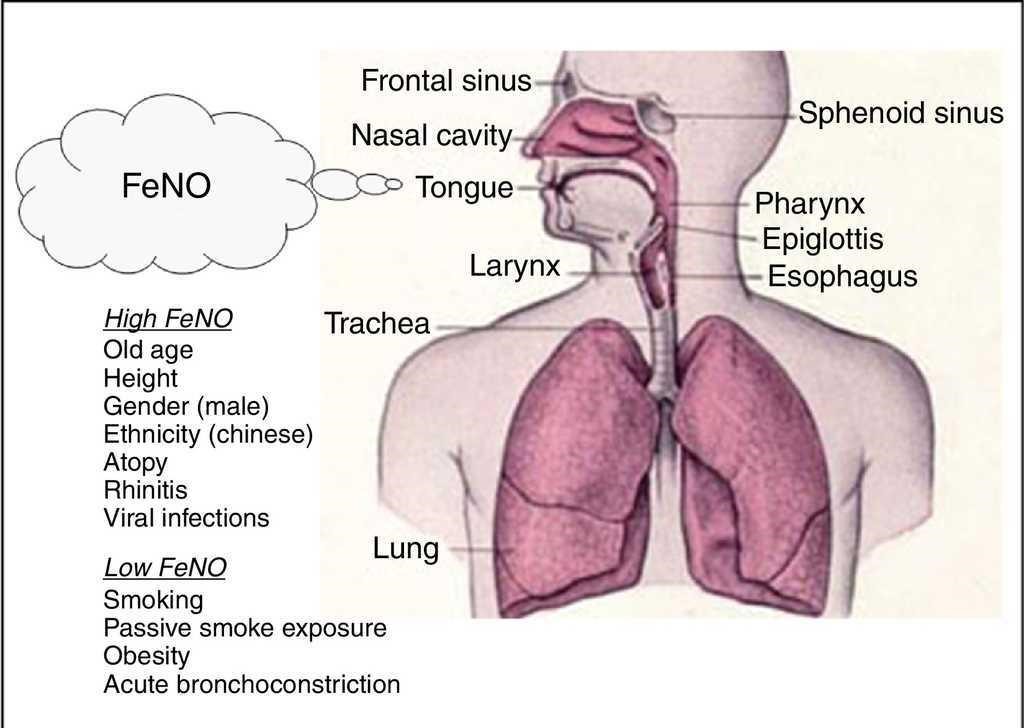
FeNO measures NO that comes primarily from the lower airways, including the bronchi and lungs. It is widely used as a biomarker for eosinophilic airway inflammation, a type of inflammation commonly seen in asthma.
How is FeNO used in asthma care?
-
Diagnosis: High FeNO levels can support a diagnosis of asthma. For adults, a level of 50 parts per billion (ppb) or higher is a key indicator; for children aged 5-16, the threshold is 35 ppb or higher.
-
Monitoring: FeNO levels change quickly with treatment. A rising FeNO level can signal worsening inflammation or poor adherence to medication, while a falling level usually indicates that corticosteroid treatment is working.
-
Guiding Treatment: Doctors can use FeNO to help decide if a patient would benefit from inhaled corticosteroids and to adjust the dose appropriately.

FnNO: The Nose's Inflammation Marker
FnNO measures NO produced in the nasal passages and sinuses. It is an important marker for allergic rhinitis, a condition commonly known as hay fever.
The Link Between Nose and Lungs
There is a strong connection between upper and lower airway inflammation, known as the "united airway disease" concept. People with allergic rhinitis often have higher levels of both FeNO and FnNO.
Research shows that patients with moderate-to-severe allergic rhinitis have significantly higher FnNO and FeNO levels compared to those with milder forms of the condition. These levels also correlate with other markers of allergy, such as blood eosinophil counts and immunoglobulin E (IgE) levels.
Why Measure Both FeNO and FnNO?
Measuring both FeNO and FnNO provides a more complete picture of a patient's airway health. This "dual measurement" is particularly useful because:
-
Comprehensive Assessment: Allergic rhinitis often coexists with asthma. Evaluating both upper and lower airway inflammation helps identify patients at risk of poor asthma control-
-
Treatment Monitoring: In one study, patients with seasonal allergic rhinitis showed a significant decrease in FnNO levels after their pollen season ended, suggesting the test could reflect real-time changes in symptoms
-
Differentiating Conditions: Both FeNO and FnNO levels are often elevated in allergic rhinitis patients compared to healthy individuals, making them useful diagnostic tools
How Are the Tests Performed?
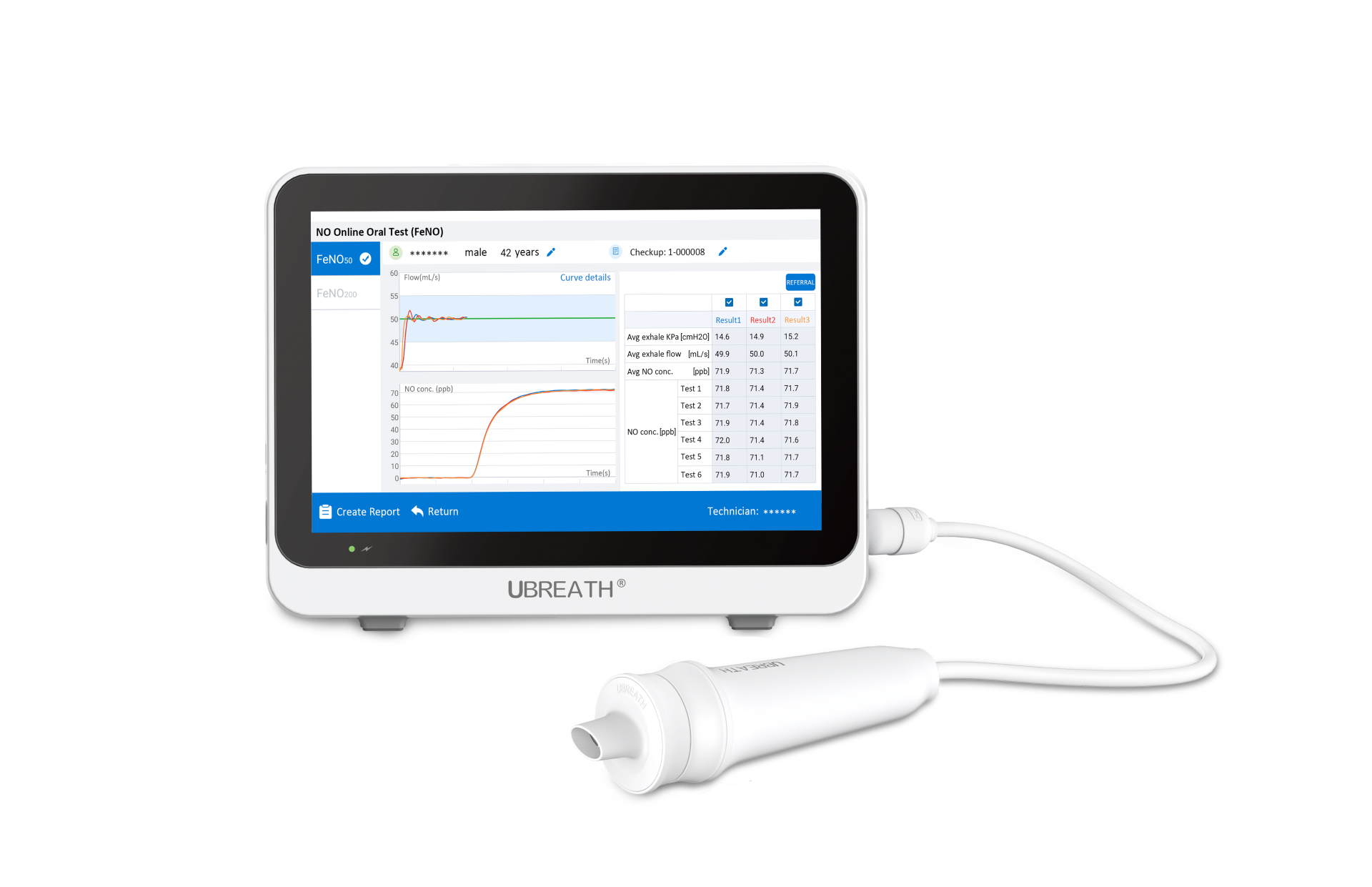
These tests are simple, non-invasive, and can be done in a clinic or doctor's office. For FeNO, you take a deep breath and then exhale slowly into a handheld device at a steady rate. For FnNO, you might breathe out through your nose while the device measures the NO from your nasal passages.
There is one important thing to remember: if you are having other lung function tests, the FeNO test should be done first. Tests like spirometry can temporarily change the NO levels in your breath, leading to inaccurate results.
Conclusion
FeNO and FnNO measurements are modern, convenient, and reliable tools that allow doctors to "see" inflammation in your airways without invasive procedures. FeNO helps with asthma management, while FnNO provides insights into nasal allergies like allergic rhinitis. By measuring both, healthcare providers can get a clearer picture of the "whole airway," leading to better diagnosis and personalized treatment plans for patients with allergic conditions.