Asthma: A Comprehensive Guide to the Chronic Airway Disease
What Is Asthma?
Asthma is a chronic condition in which the airways in the lungs become inflamed and narrow, making it difficult to breathe. The disease is characterized by diffuse airway inflammation triggered by a variety of stimuli, resulting in partially or completely reversible bronchoconstriction. Symptoms and signs include dyspnea (shortness of breath), chest tightness, cough, and wheezing. Asthma attacks come and go, and can range from mild to life-threatening.
What Happens During an Asthma Attack?
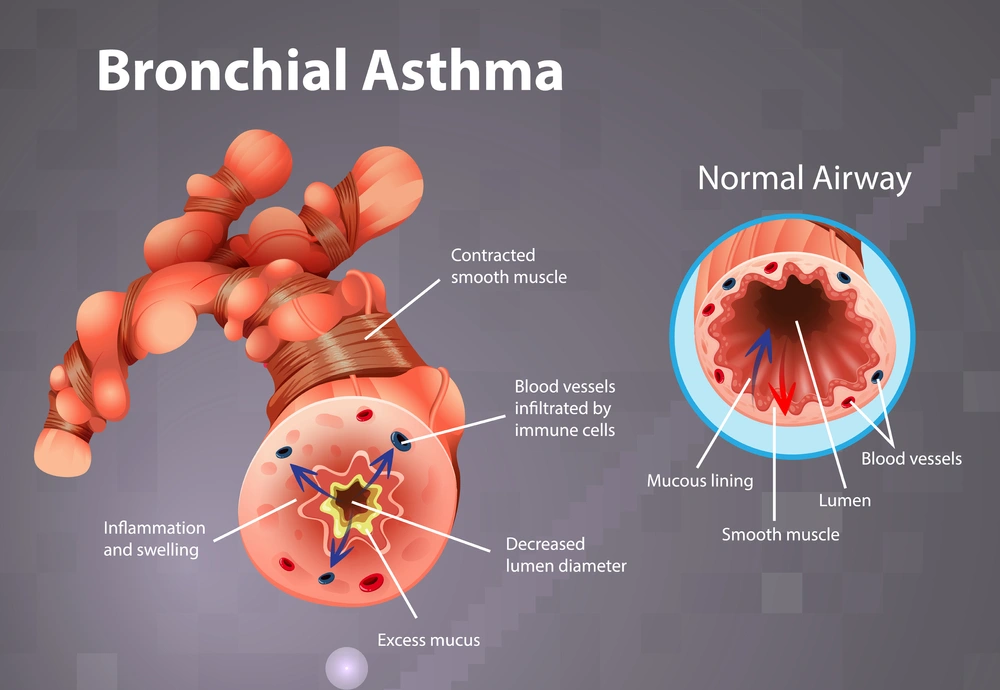
During an asthma attack, several processes work together to narrow the airways. The lining of the breathing passages swells up, the airways fill with thick mucus, and the muscles surrounding the airways tighten, which contributes to closing off the passages. This combination of inflammation, mucus production, and bronchoconstriction leads to the characteristic symptoms of an asthma episode.
Asthma is a life-long lung condition that makes breathing difficult due to inflammation and excess mucus in the airways. The airways become sensitive and inflamed, which makes breathing more challenging. There is no cure for asthma, but with proper care, most people can lead active lives.
Types and Phenotypes of Asthma
Asthma is a heterogeneous disease with various distinct underlying mechanisms and clinical phenotypes. Key phenotypes include:
Allergic asthma is the most widely recognized type, often beginning in childhood and associated with a personal or family history of allergic diseases such as eczema, allergic rhinitis, or food or drug allergies. Patients with this phenotype usually respond well to inhaled corticosteroid treatment.
Non-allergic asthma is not associated with a history of allergies. The cellular profile of sputum in these patients may be neutrophilic, eosinophilic, or contain a small amount of inflammatory cells.
Cough-variant asthma occurs when cough is the only symptom, and evidence of variable airflow limitation may be absent except during bronchial provocation testing. Inhaled corticosteroid therapy is effective for this phenotype.
Adult-onset (late-onset) asthma occurs particularly in women who present with asthma for the first time during adulthood. These patients tend to be non-allergic and often require high doses of inhaled corticosteroids or are relatively refractory to this therapy. Occupational asthma should be ruled out in such cases.
Asthma with obesity presents in patients classified as obese who have prominent respiratory symptoms and a different pattern of airway inflammation with little eosinophilic inflammation.
At the molecular level, asthma is increasingly understood through the lens of type 2 and non-type 2 endotypes. The pro-inflammatory environment in asthma influences airway smooth muscle structure and function, contributing to airflow obstruction, airway hyperresponsiveness, and remodeling. These inflammatory responses are mediated by cytokines such as IL-4, IL-5, IL-13, and TSLP in type 2 asthma, and TNF-α, IFN-γ, IL-17A, and TGF-β in non-type 2 asthma.
Symptoms
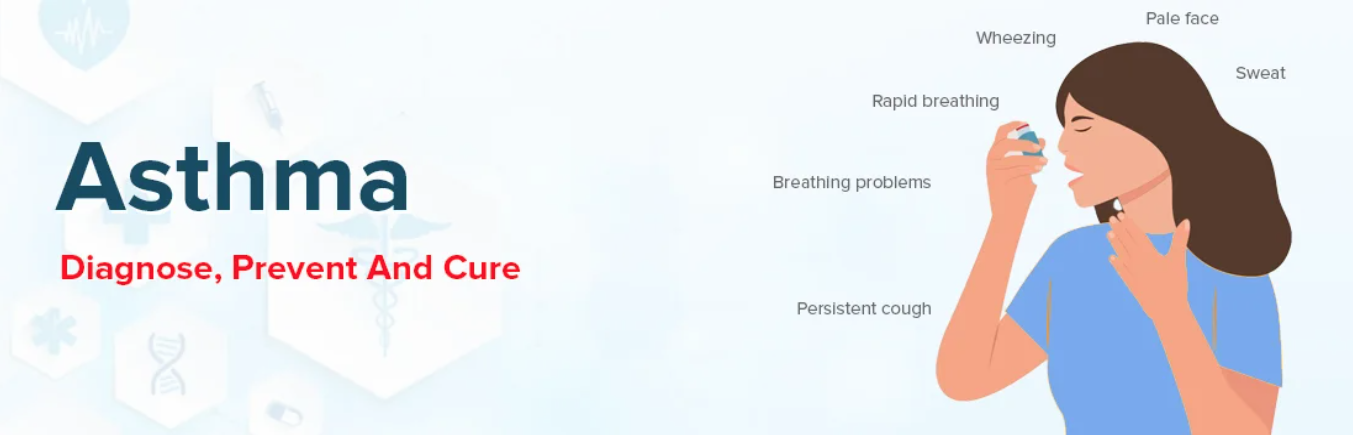
Common asthma symptoms include a tight feeling in the chest, wheezing, and shortness of breath. Sometimes coughing is the only symptom. Symptoms may last for minutes, hours, or days, and most people recover with the right treatment, even from severe attacks. However, asthma attacks can be fatal.
Symptoms of a severe asthma attack include struggling to breathe, feeling like you cannot get air in or out of the lungs, confusion, insufficient air to walk or talk, and blue lips or fingers from low oxygen in the blood. These symptoms require emergency medical attention.
Common Triggers
Various factors can trigger asthma attacks. Common triggers include allergens such as pollen, dust, and animal hair; respiratory infections; exercise; and irritants in the air such as cigarette smoke and strong fumes. Other triggers that affect some people include cold air, acid reflux, aspirin (usually in people with severe asthma), and sulfites used as preservatives in some foods and wine.
Diagnosis
Doctors typically suspect asthma based on symptoms and medical history, including any personal or family history of allergies. To confirm the diagnosis, breathing tests are performed.
Spirometry is the primary lung function test used to diagnose asthma. It measures the amount of air a person can breathe in and out and the ease and speed of breathing. The diagnosis of asthma is based on characteristic variation in respiratory symptoms and evidence of variable expiratory airflow limitation from lung function testing.
A key diagnostic criterion is significant bronchodilator reversibility: an increase in FEV₁ (forced expiratory volume in one second) of 12% or more and 200 mL or more from the pre-bronchodilator measurement. If spirometry is not available, peak expiratory flow (PEF) monitoring should be used rather than relying on symptoms alone.
Treatment and Management
Treatment involves controlling triggering factors and pharmacotherapy, most commonly with inhaled beta-2 agonists and inhaled glucocorticoids. Asthma medications are usually inhaled directly into the airways, and children may find it easier to use a spacer device, which gives them more time to breathe in the medicine.
The Global Initiative for Asthma (GINA) provides the most widely adopted international guidelines. The 2026 GINA update emphasizes that all asthma patients should take inhaled corticosteroid (ICS)-containing regimens as basic treatment, and ICS-formoterol maintenance and reliever therapy (MART) is the first choice. The 2026 edition formally abolished short-acting beta-2 agonist (SABA) monotherapy, establishing an anti-inflammatory treatment approach across the entire management spectrum.
For patients with severe asthma and evidence of type 2 inflammation, biologic therapies offer additional options. These include anti-immunoglobulin E (IgE) monoclonal antibodies (such as omalizumab), anti-interleukin (IL)-4 monoclonal antibodies (such as dupilumab), anti-IL-5 monoclonal antibodies (such as mepolizumab and benralizumab), and anti-thymic stromal lymphopoietin (TSLP) monoclonal antibodies.
Global Burden
Asthma affects approximately 260 million people worldwide. In 2021, the disease was responsible for approximately 436,000 to 455,000 deaths globally. However, the outlook is improving: from 1990 to 2021, age-standardized prevalence, mortality, and DALY rates dropped by 40.01%, 46.06%, and 44.46%, respectively.
The burden is not evenly distributed. Asthma prevalence peaks in high-SDI (socio-demographic index) regions, while mortality is highest in low-SDI settings. High body mass index has emerged as a primary risk factor for asthma. Sex disparities are also clear: asthma predominantly affects females in adulthood.
Living Well with Asthma
Although there is no cure for asthma, the condition can be effectively managed. A child's asthma is considered under control when there are no symptoms upon waking, symptoms occur less than twice a week, reliever medicine is used less than twice a week (except before exercise), symptoms resolve quickly after medication, and normal activities can be performed without asthma symptoms.
Avoiding known triggers, adhering to prescribed medications, and regular monitoring of lung function are essential components of successful asthma management. With appropriate care, most people with asthma can lead full, active lives.