Pulmonary Function Tests: A Window into Your Lung Health
Why measuring how you breathe matters—and what the numbers really mean
Your lungs are remarkably efficient. At rest, you may take only 12 to 20 breaths per minute, yet those breaths move oxygen into your bloodstream and remove carbon dioxide with every heartbeat. But lung disease can develop silently. You might feel fine while your lungs are already losing function. Pulmonary function tests (PFTs) help close that gap. They turn something as subjective as “I feel short of breath” into objective, measurable data about how well your lungs are working.
PFTs are not a single test. They are a group of non-invasive and minimally invasive tests that evaluate different aspects of respiratory physiology: how much air you can move, how quickly you can move it, how well oxygen crosses into your blood, and whether your respiratory muscles are strong enough to support breathing. Together, these measurements can diagnose disease, classify its severity, guide treatment, and predict future risk.
What PFTs Measure
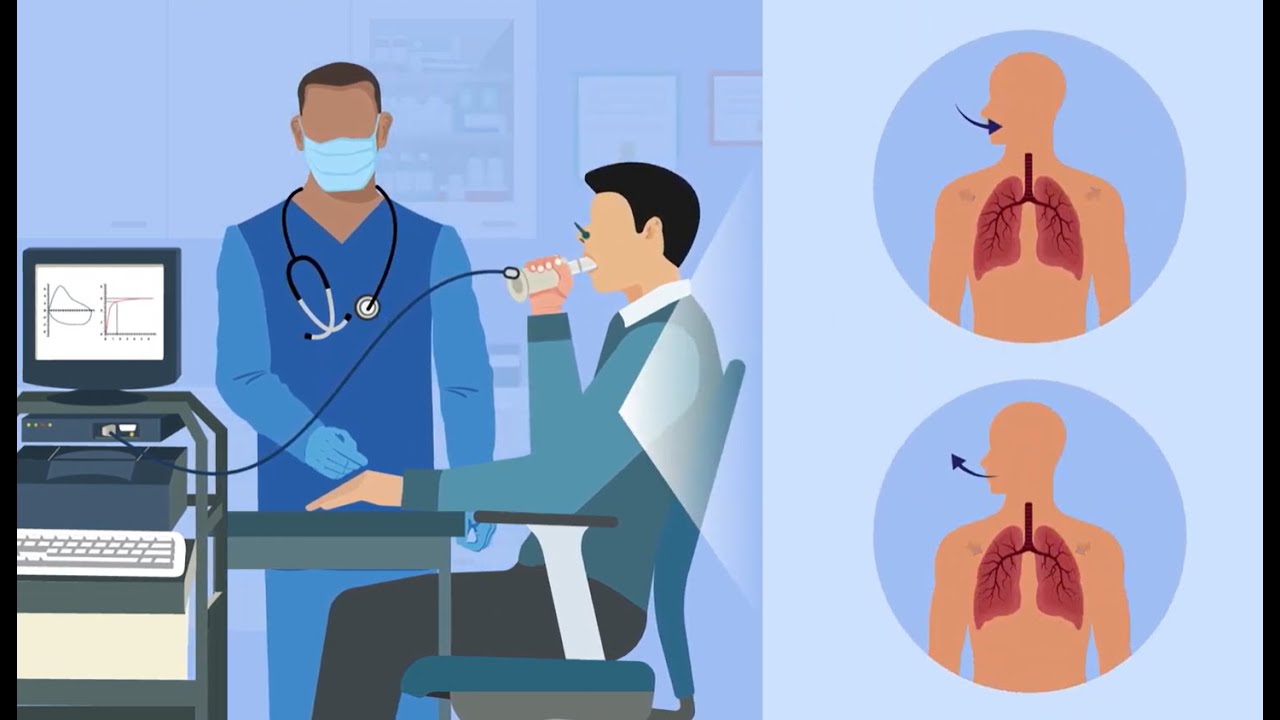
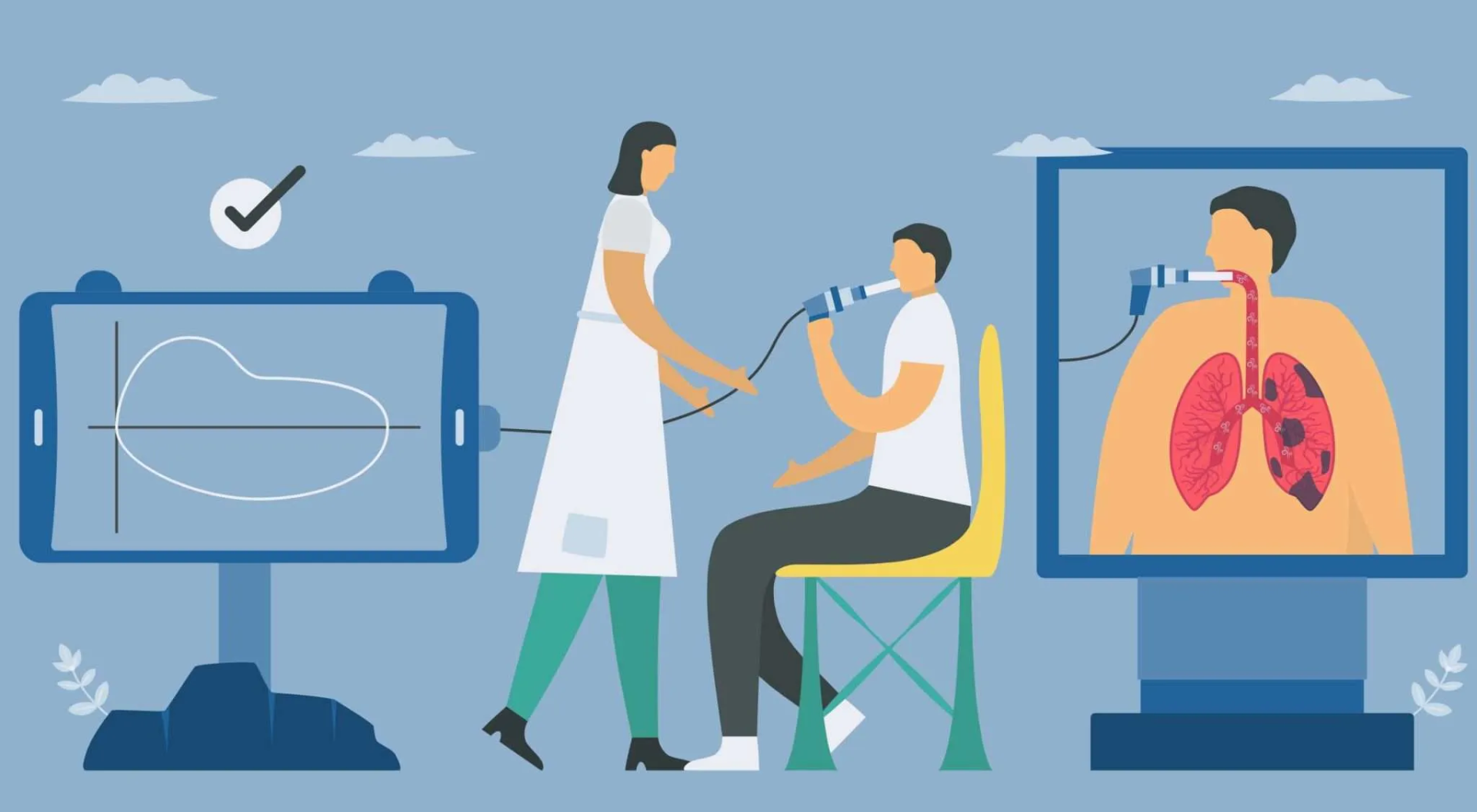
The most familiar PFT is spirometry. You breathe into a mouthpiece connected to a spirometer, first normally, then with deep breaths, and finally with forceful exhalations. Spirometry produces two key numbers: FEV1 (forced expiratory volume in one second) and FVC (forced vital capacity, the total amount of air you can forcefully exhale). The ratio of FEV1 to FVC is especially important. A reduced FEV1/FVC ratio suggests an obstructive pattern, commonly seen in asthma, COPD, and bronchiectasis. A normal or high ratio with a reduced FVC suggests a restrictive pattern, which may occur in pulmonary fibrosis, chest wall disorders, or neuromuscular disease. However, restriction usually needs confirmation with lung volume measurements.
Lung volume tests measure the total amount of air in the lungs, including air that remains after a full exhalation. Tests such as body plethysmography or gas dilution can measure total lung capacity (TLC), functional residual capacity (FRC), and residual volume (RV). These are useful for detecting hyperinflation in COPD, restriction in interstitial lung disease, and air trapping in asthma. They also help distinguish true restriction from poor effort during spirometry.
Diffusing capacity for carbon monoxide (DLCO) assesses how well gas moves from the alveoli into the bloodstream. A low DLCO can indicate emphysema, interstitial lung disease, pulmonary hypertension, or anemia. It can also be reduced in pulmonary vascular disease. An unexpectedly normal or high DLCO in a patient with obstructive spirometry may point toward asthma rather than emphysema. Because DLCO depends on hemoglobin, altitude, and other factors, it is interpreted alongside the clinical picture.
Other tests add further depth. Bronchial challenge tests, such as methacholine or exercise challenge, can help diagnose asthma when baseline spirometry is normal. Respiratory muscle strength tests, including maximal inspiratory and expiratory pressures, are useful in neuromuscular disorders such as ALS or myasthenia gravis. Pulse oximetry and arterial blood gases assess oxygenation and carbon dioxide retention. Cardiopulmonary exercise testing and the six-minute walk test evaluate how the lungs perform under real-world conditions. No single test tells the whole story; the pattern across tests often does.
Why PFTs Matter
First, PFTs help diagnose and classify lung disease. Asthma, COPD, interstitial lung disease, cystic fibrosis, and occupational lung diseases all produce characteristic patterns. PFTs can also distinguish obstructive from restrictive physiology, which narrows the differential diagnosis and guides further testing.
Second, they assess severity and prognosis. In COPD, FEV1 is used to stage airflow limitation, although symptoms and exacerbations also matter. In idiopathic pulmonary fibrosis, serial FVC measurements can reveal decline and help predict outcomes. In cystic fibrosis, PFTs track long-term lung function and guide treatment intensification. A falling FEV1 or DLCO may signal worsening disease before symptoms become obvious.
Third, PFTs monitor treatment response. Did an inhaled corticosteroid improve asthma control? Is a new drug for pulmonary fibrosis slowing decline? Is a patient with myasthenia gravis developing respiratory muscle weakness? Objective measurements can answer these questions more reliably than symptoms alone. They also help doctors avoid unnecessary treatment escalation or de-escalation.
Fourth, PFTs play a major role in preoperative risk assessment. Before lung resection, upper abdominal surgery, or cardiac surgery, doctors may use spirometry and DLCO to estimate the risk of postoperative complications. In some cases, PFTs help determine whether a patient can tolerate surgery at all or whether less invasive options should be considered.
Fifth, PFTs are essential in occupational health. Workers exposed to silica, asbestos, coal dust, welding fumes, or agricultural dusts may undergo regular spirometry to detect early lung damage. Early detection can lead to reduced exposure, workplace changes, and better long-term outcomes. PFTs also provide objective evidence for workers’ compensation and disability claims.
Sixth, PFTs contribute to public health and research. They help estimate the burden of COPD and asthma, identify undiagnosed disease, and evaluate the effectiveness of public health interventions. In clinical trials, PFTs are often primary or secondary endpoints for new respiratory medications.
Finally, PFTs can empower patients. Seeing a number improve or decline can make lung health more concrete. It can motivate smoking cessation, medication adherence, pulmonary rehabilitation, and avoidance of triggers. For many patients, PFTs transform a vague sense of breathlessness into a manageable, measurable condition.
How Doctors Interpret PFTs
PFT results are always interpreted in context. Normal values depend on age, height, sex, and ethnicity, and modern reference equations are used to calculate predicted values. A result below the lower limit of normal may be abnormal, but the pattern matters more than any single number. Doctors also consider test quality. Spirometry requires good effort and technique; poor effort can produce misleading results. A normal PFT does not always exclude disease, especially early asthma or mild interstitial lung disease. An abnormal PFT does not by itself identify the cause. The test is a tool, not a diagnosis.
What to Expect
PFTs are generally safe and well tolerated. You may feel tired or slightly short of breath afterward. Some tests involve breathing a harmless gas or inhaling a medication. Serious complications are rare, but PFTs may be postponed if you have had a recent heart attack, pneumothorax, hemoptysis, or recent eye, chest, or abdominal surgery. Always tell the technician about your medical history and medications.
Who Should Consider PFTs?
You may benefit from PFTs if you have a persistent cough, wheezing, shortness of breath, chest tightness, or exercise limitation. They are also recommended for people with a history of smoking, known lung disease, occupational exposure to lung irritants, or a family history of respiratory disease. If you are scheduled for certain surgeries or are being evaluated for disability, PFTs may be part of the assessment.
The Bottom Line
Pulmonary function tests are more than a breathing test. They are a window into respiratory physiology, offering objective information about diagnosis, severity, progression, treatment response, and risk. They cannot replace a careful medical history or physical examination, but they add a dimension that symptoms alone cannot provide. If you have respiratory symptoms or risk factors, talk with your doctor about whether PFTs are right for you. Breathing well begins with understanding how your lungs are working.