Breath That Tells a Story: How FeNO Testing Helps Diagnose Asthma
Asthma is one of the most common chronic respiratory conditions worldwide, yet diagnosing it has never been entirely straightforward. Unlike diabetes or hypertension, asthma has no single “gold standard” blood test or scan that delivers a definitive answer. Doctors rely on a mosaic of evidence: the patient’s story, physical examination, and lung function tests such as spirometry. In recent years, a simple breath test has joined that diagnostic toolkit—one that measures a gas you exhale called fractional exhaled nitric oxide, or FeNO. It is quick, non-invasive, and offers a window into a specific kind of airway inflammation that lies at the heart of many asthma cases. But like any tool, FeNO has strengths, blind spots, and nuances that both clinicians and patients need to understand.
What FeNO Measures and Why It Matters
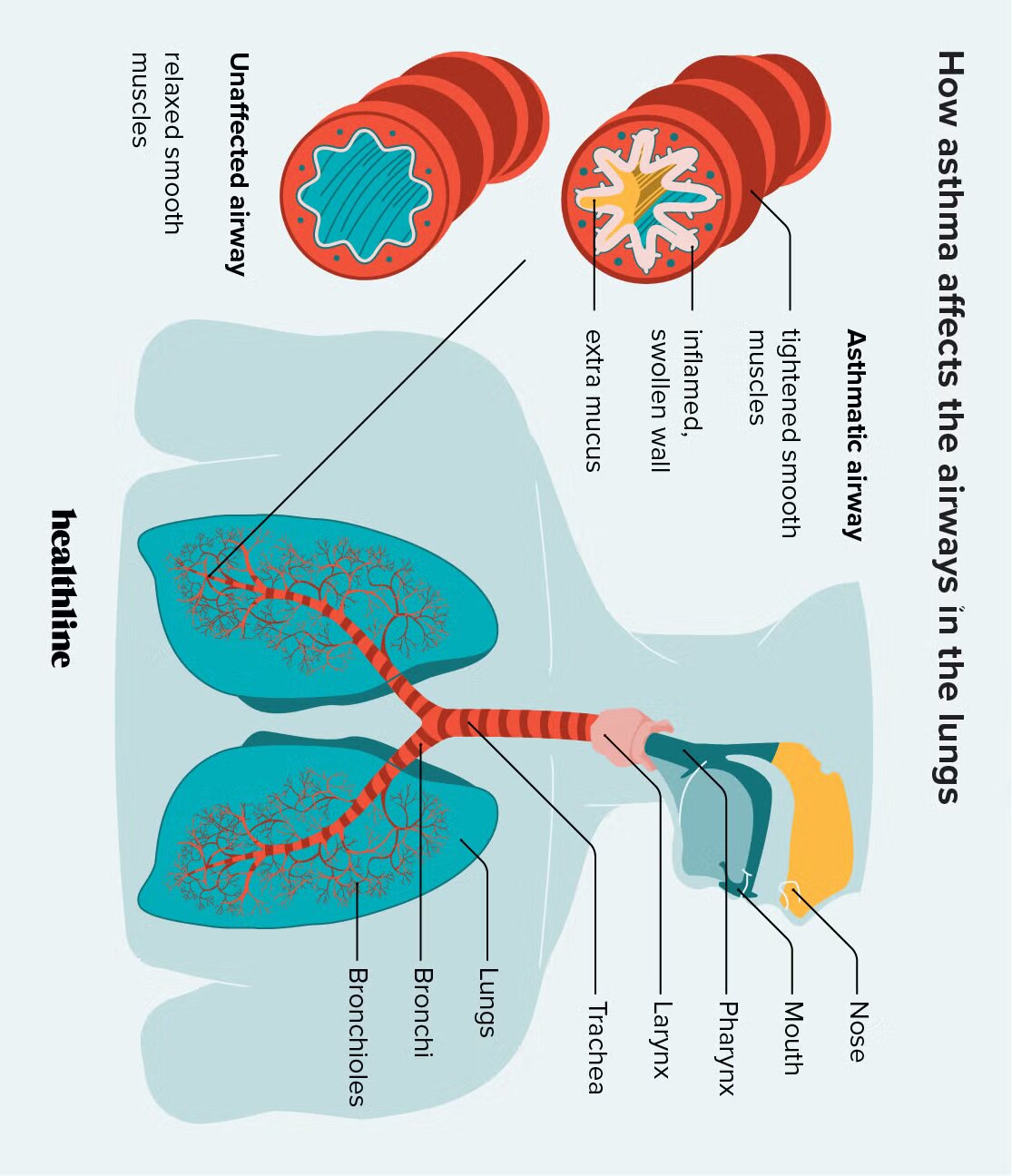
Nitric oxide is not merely a pollutant floating in city air; it is also produced naturally within the human airways. In certain types of asthma, the cells lining the bronchial tubes begin to express higher levels of an enzyme called inducible nitric oxide synthase (iNOS). This enzyme is switched on by cytokines such as IL-13, a key driver of what is known as type 2 airway inflammation. When iNOS is active, the airway epithelium releases more nitric oxide, and that excess gas is carried out on the breath. Measuring FeNO therefore gives an indirect but real-time readout of type 2 inflammation—the same inflammatory pathway that makes asthma responsive to inhaled corticosteroids.
This biological logic is what makes FeNO attractive. It is not a generic marker of “sickness”; it points toward a particular endotype of asthma—the type 2–high phenotype—which tends to respond well to steroid treatment and, in more severe cases, to biologic therapies targeting IL-4, IL-5, or IL-13. In practical terms, a high FeNO does not just say “something is inflamed”; it says “this is likely the kind of inflammation that steroids can calm down.”
Reading the Numbers: What Counts as “High”?
One of the first questions anyone asks about a medical test is: what is the cutoff? For FeNO, the answer depends on whom you ask and how old the patient is. The most widely cited framework comes from the American Thoracic Society (ATS), which divides FeNO into three zones for adults: below 25 parts per billion (ppb) is considered low, 25 to 50 ppb is intermediate, and above 50 ppb is high. For children, the thresholds shift downward: below 20 ppb is low, 20 to 35 ppb is intermediate, and above 35 ppb is high. A high value, in the right clinical context, supports a diagnosis of asthma driven by eosinophilic or type 2 inflammation; a low value makes that diagnosis less likely, though it does not rule it out.
Guidelines have not settled on a single universal number, and that is not a sign of confusion but of pragmatism. The European Respiratory Society has often used a cutoff of 50 ppb to favor specificity—meaning a positive result is more likely to be “real”—while acknowledging that lowering the threshold to 25 ppb catches more cases at the cost of more false positives. The United Kingdom’s NICE guidance, updated in 2024, took a more assertive stance: in adults with a history suggestive of asthma, FeNO can be used as an initial test, and a value of 35 ppb or higher is sufficient to diagnose asthma in the appropriate clinical setting. For children aged 5 to 16, NICE likewise recommends FeNO as a first-line objective test, with 35 ppb as the diagnostic threshold. The Global Initiative for Asthma (GINA) takes a more conservative position, recommending FeNO as an adjunct to spirometry rather than a stand-alone diagnostic. These differences reflect a shared underlying principle: FeNO is most powerful when interpreted alongside the clinical picture, not in isolation.
How the Test Is Done—and What Can Go Wrong
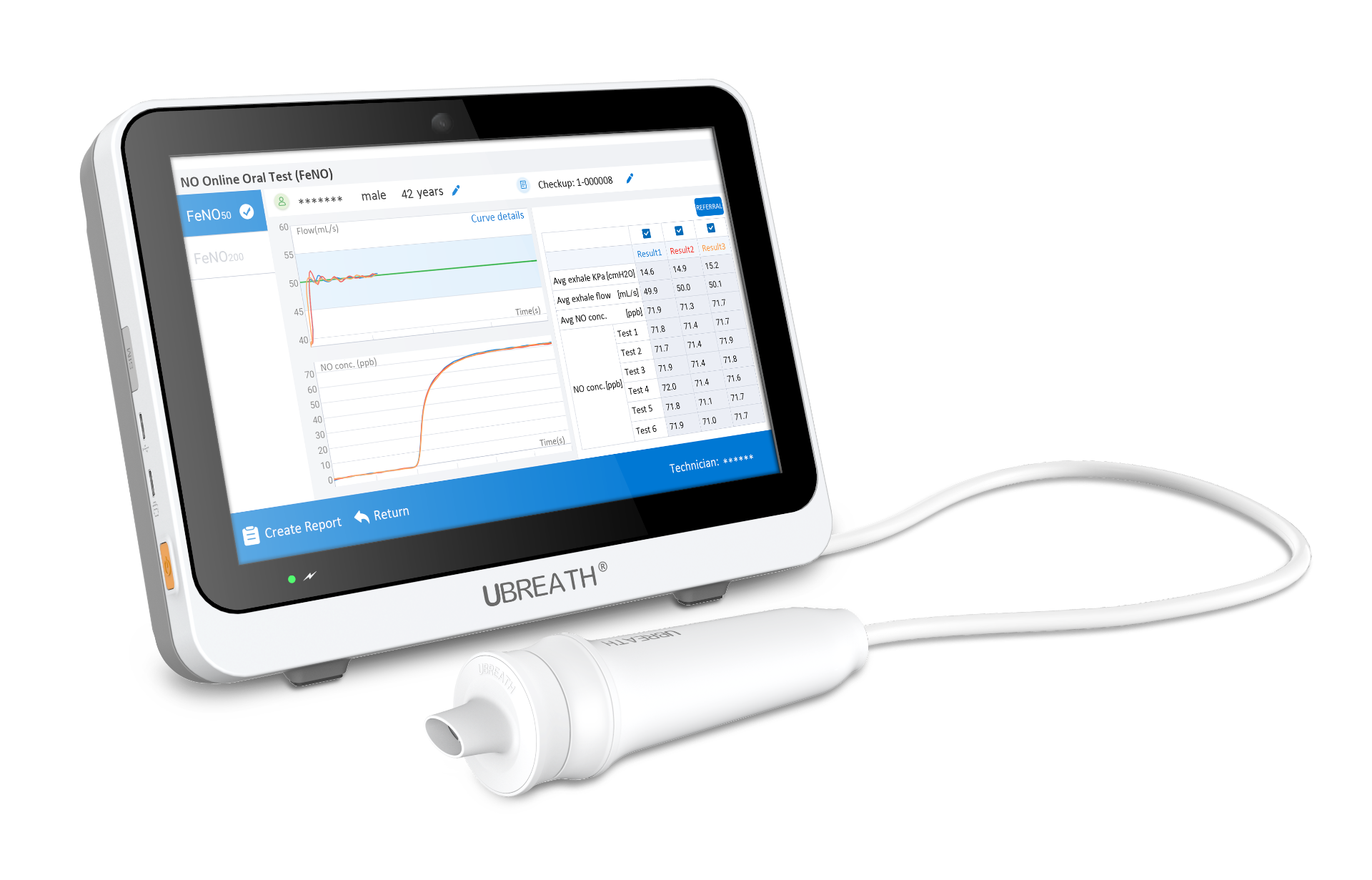
The FeNO test itself is remarkably simple for the patient. You sit comfortably, inhale deeply through a mouthpiece to total lung capacity, and then exhale slowly and steadily at a constant flow rate—typically 50 milliliters per second—for several seconds. The device measures nitric oxide in the exhaled breath, and the plateau of the exhalation curve is used for the reading. The entire maneuver usually takes less than a minute, and results are available immediately.
But the simplicity of the procedure belies the importance of standardization. Nitric oxide levels can be swayed by a long list of factors that have nothing to do with asthma. Eating nitrate-rich foods such as beetroot can raise FeNO by 20% to 60%; smoking a cigarette can lower it by 40% to 60%; vigorous exercise, alcohol, and even the time of day can introduce noise. Viral respiratory infections, allergic rhinitis, and nasal polyposis can all push FeNO upward without asthma being present, while inhaled corticosteroids—the very treatment asthma patients often use—suppress FeNO and can mask a true elevation. For these reasons, standardized protocols ask patients to avoid eating, drinking, and smoking for at least an hour before the test, to defer testing during a viral illness if possible, and to record all medications and recent allergen exposures.
The technical performance of the test also matters. The exhalation flow must be kept constant, because a faster or slower breath changes the concentration of nitric oxide at the measurement point. Portable devices used in primary care have made FeNO testing far more accessible, but success rates are not perfect: in one community audit of nearly 470 patients, FeNO was successfully obtained in 98.5% of attempts, which speaks well of the technique’s feasibility outside specialized centers. In young children, however, maintaining a steady 50 mL/s exhalation can be challenging, particularly under the age of eight, and technicians often need extra patience and coaching.
What the Evidence Says About Diagnostic Accuracy
When FeNO is compared against established diagnostic methods, the results are consistent but not spectacular. A systematic review and meta-analysis of 26 studies found that nitric oxide testing had an overall sensitivity of about 65% and a specificity of about 82% for diagnosing asthma. In plain language, that means FeNO will miss roughly one-third of people who truly have asthma, while correctly identifying most people who do not. Its specificity is higher than its sensitivity, which makes it better at “ruling in” asthma than at “ruling out” the disease. A normal or low FeNO in a patient with suggestive symptoms does not close the book; it simply shifts attention toward other possibilities or toward asthma subtypes that are not driven by type 2 inflammation.
These numbers explain why guidelines converge on the same message: FeNO is an adjunct, not a replacement for clinical judgment or spirometry. In the NICE-aligned pathway, FeNO serves as a rapid first filter—if it is clearly elevated, the diagnosis can be made with confidence; if it is low or intermediate, spirometry with bronchodilator reversibility becomes the next step. Real-world audits show that this strategy can be efficient: in one pediatric clinic, 78% of asthma diagnoses were made on the basis of elevated FeNO alone, sparing many children the time and effort of more cumbersome lung function testing. In adult community clinics, a FeNO-led pathway allowed nearly one-fifth of patients with markedly high FeNO to avoid further testing altogether. At the same time, a substantial proportion of patients still require spirometry, and the yield of bronchodilator reversibility testing in unselected patients can be modest—a reminder that no single test carries the entire diagnostic burden.

Where FeNO Fits in the Broader Picture
Perhaps the most important thing to understand about FeNO is that it answers a different question than spirometry does. Spirometry measures airflow limitation—whether the pipes are narrowed and whether they open up after a bronchodilator. FeNO measures the inflammatory “weather” inside those pipes. A patient can have normal spirometry and still have active type 2 inflammation, just as a patient can have airflow obstruction without elevated FeNO. The two tests are complementary, not competing.
This complementarity extends beyond diagnosis. FeNO is increasingly used to guide treatment: patients with high FeNO are more likely to benefit from inhaled corticosteroids, and serial FeNO measurements can help clinicians decide whether to step therapy up or down. In the era of biologic therapies for severe asthma, FeNO has become one of the biomarkers—alongside blood eosinophils and IgE—used to characterize type 2 inflammation and select patients for targeted treatments. It is also a useful conversation starter: a visibly elevated number on a screen can help patients understand that their symptoms have a measurable biological basis, which may improve adherence to anti-inflammatory therapy.
The Bottom Line for Patients and Clinicians
FeNO testing is not a lie detector for asthma, and it was never meant to be. It is a fast, safe, and physiologically grounded tool that sheds light on one important dimension of asthma biology: type 2 airway inflammation. Its strengths lie in its non-invasiveness, immediate results, and ability to identify patients likely to respond to steroid treatment. Its limitations lie in its imperfect sensitivity, its susceptibility to confounding by food, smoke, infection, and medication, and its inability to capture asthma subtypes that are not driven by type 2 pathways.
The practical lesson is simple. If you are being evaluated for asthma and your doctor orders a FeNO test, the result is one piece of a puzzle—valuable, but not decisive on its own. An elevated FeNO in the context of typical symptoms makes asthma more likely and suggests that inhaled corticosteroids are a rational treatment. A low FeNO does not mean your symptoms are imaginary; it means the search may need to continue with other tests. The best diagnostic decisions are made when the breath test is woven together with the patient’s history, physical examination, and—when needed—spirometry and other objective measures. In that integrated approach, FeNO has earned a permanent place in the asthma diagnostic story.