Asthma Diagnosis: Why “It Sounds Like Asthma” Is Not Enough
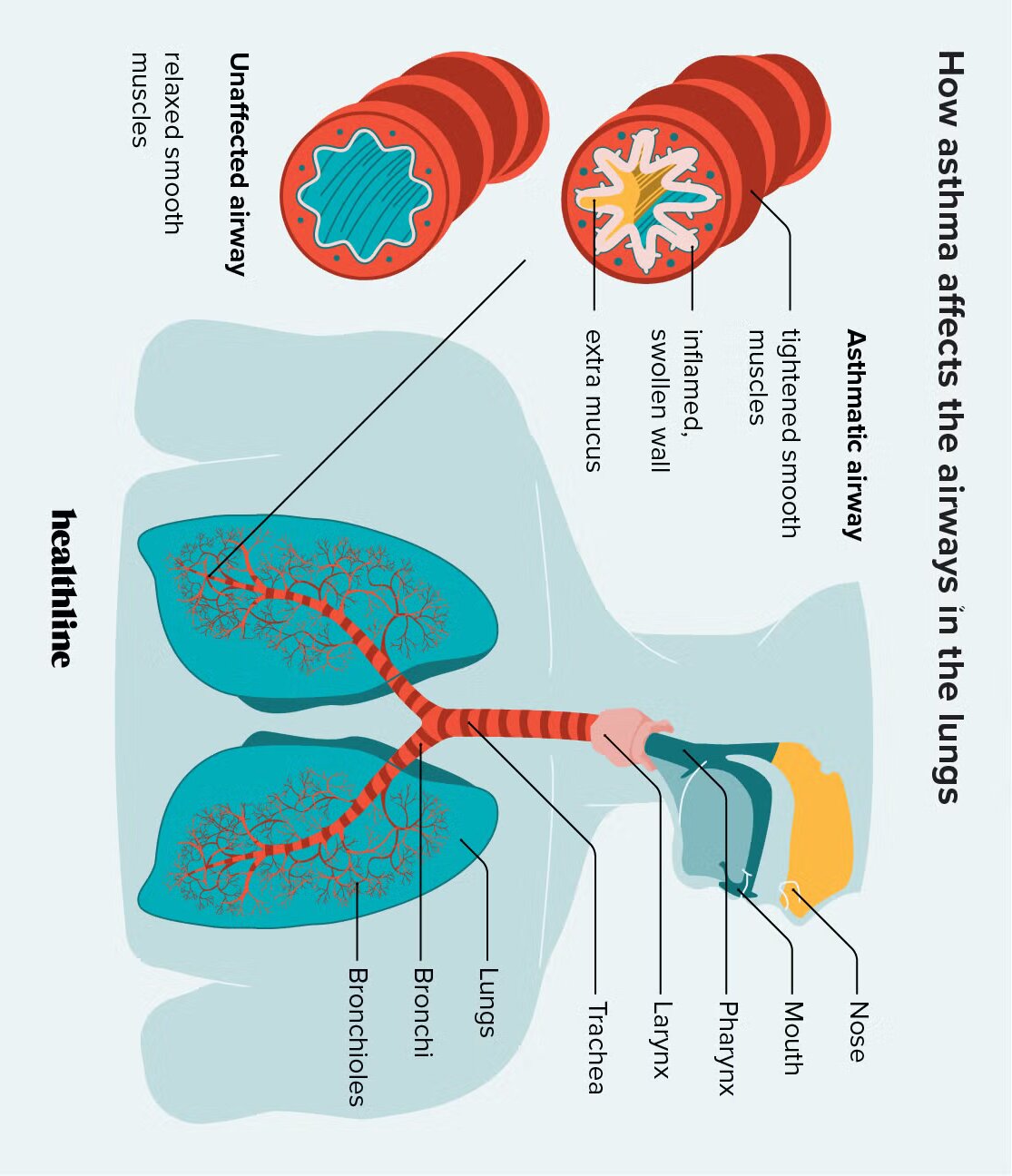
Asthma is one of the most common chronic conditions in the world, yet getting the diagnosis right remains surprisingly difficult. Up to one third of adults labelled with asthma in primary care cannot have the diagnosis confirmed when formally retested. Some of them turn out to have other serious cardiorespiratory conditions; others have asthma that was never objectively documented. The core problem is that asthma symptoms—wheeze, cough, breathlessness, chest tightness—are nonspecific. They overlap with COPD, heart failure, vocal cord dysfunction, and even normal variation in breathing. A diagnosis built on symptoms alone is, at best, an educated guess.
Diagnosis begins with a pattern, not a single symptom
The clinical history is not obsolete; it tells the clinician where to look. Asthma is characteristically variable: symptoms come and go, often worse at night or early morning, triggered by exercise, allergens, cold air, or respiratory infections. A history of personal or family allergy, eczema, or hay fever raises the pre-test probability. But even a textbook history does not confirm the diagnosis. The next step is to demonstrate the physiological hallmark of asthma: variable expiratory airflow limitation.
Spirometry with bronchodilator responsiveness is the cornerstone
Spirometry measures how much air a person can forcefully exhale and how quickly. In asthma, the airways narrow, so the ratio of forced expiratory volume in one second (FEV₁) to forced vital capacity (FVC) often falls below 70%, indicating obstruction. But obstruction alone is not asthma—COPD causes it too. What distinguishes asthma is that the obstruction is reversible, at least some of the time.
The standard confirmation is a bronchodilator responsiveness (BDR) test: spirometry is performed before and after inhaling a short-acting bronchodilator such as salbutamol. A positive result—an increase in FEV₁ of ≥12% and ≥200 mL from baseline—supports the diagnosis. This threshold has been reaffirmed in the 2026 GINA strategy report after large datasets showed that looser criteria risked underdiagnosis. When spirometry is unavailable, peak expiratory flow (PEF) variability can serve as a fallback: a diurnal variation of ≥20% over two weeks is suggestive, though PEF is less reliable than spirometry.
Biomarkers add speed and specificity
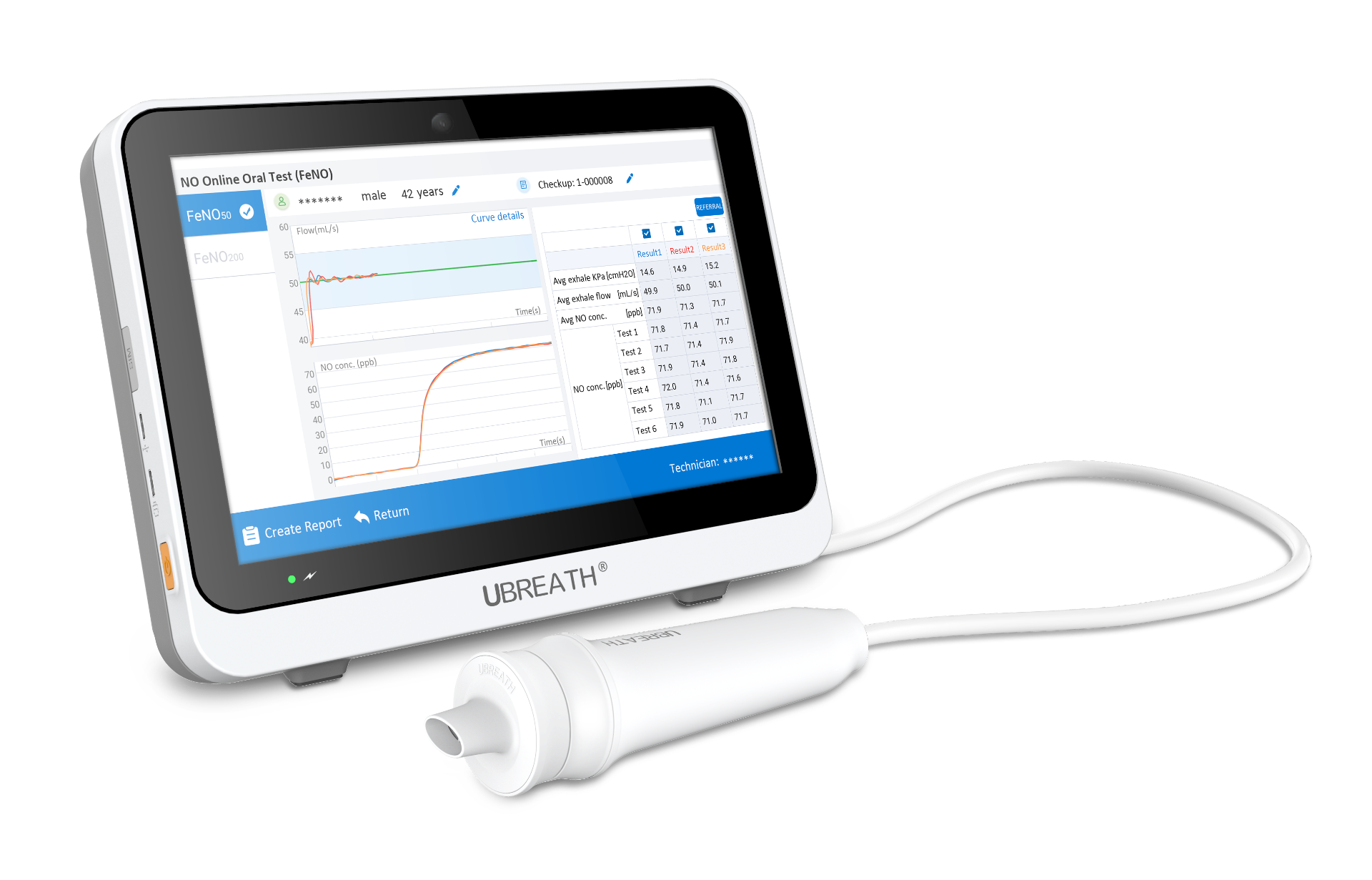
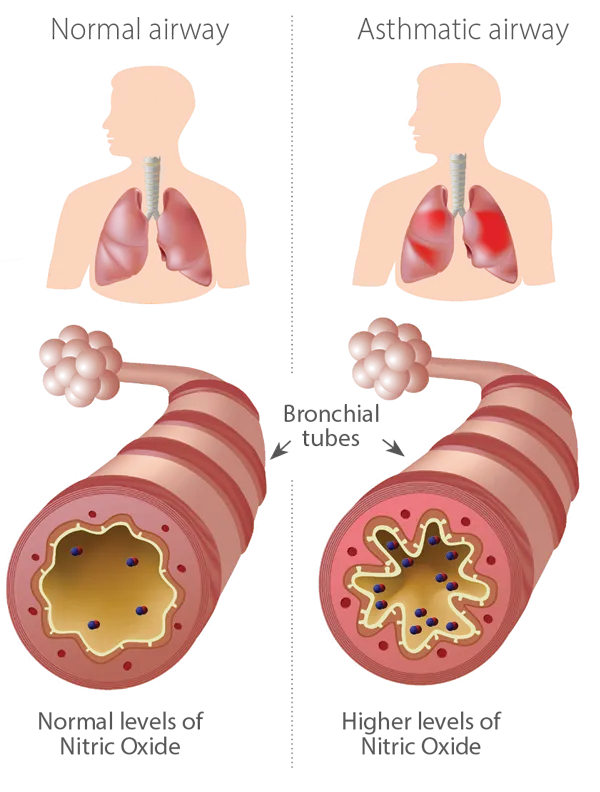
Type 2 inflammation—the biological driver in most asthma—leaves measurable traces. Fractional exhaled nitric oxide (FeNO) is a simple breath test. A meta-analysis of over 4,500 adults found that FeNO has good diagnostic accuracy overall, and a value above 46 ppb carries a specificity of 96%, meaning it can effectively rule in asthma. In clinical practice, cut-offs of ≥50 ppb in adults and ≥35 ppb in children are commonly used. Blood eosinophil count is another accessible marker: an elevated count supports an asthma diagnosis, though lower levels do not exclude it.
When the picture is unclear, challenge testing helps
Some people with convincing symptoms have normal spirometry and normal FeNO between episodes. In that situation, a bronchial challenge test can be decisive. Methacholine or histamine is inhaled in increasing concentrations to see whether the airways constrict too easily. A PC₂₀ above 16 mg/mL (the concentration causing a 20% fall in FEV₁) rules out current asthma with reasonable certainty; a PC₂₀ below 1 mg/mL is close to diagnostic. Intermediate values require clinical judgment. Challenge testing is generally reserved for secondary care, but it fills an important gap when first-line tests are nondiagnostic.
What else could it be?
The differential diagnosis is broad, and missing an alternative can be dangerous. In adults, COPD is the most common mimic; it also causes obstruction, but the pattern is persistent rather than variable, and the patient is typically older with a smoking history. Heart failure can produce “cardiac asthma” with wheeze, but signs such as orthopnea and an elevated BNP point elsewhere. Inducible laryngeal obstruction (sometimes called vocal cord dysfunction) causes inspiratory stridor rather than expiratory wheeze and often fails to respond to asthma treatment. In children, foreign body aspiration, viral bronchiolitis, and structural airway abnormalities must be considered, especially when wheeze is unilateral or onset is sudden.
Children under five: a different diagnostic logic
Lung function testing is unreliable in preschoolers because most cannot perform reproducible forced expiratory maneuvers. Diagnosis in this age group therefore rests on a therapeutic trial: a 2–3 month course of inhaled corticosteroids, with careful assessment of symptom control and exacerbation frequency. Marked improvement during treatment and deterioration when it is stopped support the diagnosis, though the trial may need to be repeated. Allergy testing can also inform risk, since sensitisation is present in most children with asthma after age three and is the best predictor of persistent disease.
The frontier: pattern recognition by machine
Artificial intelligence is beginning to change how asthma might be detected. Models trained on breath sounds can distinguish asthmatic from non-asthmatic breathing with reported accuracies above 90% in research settings. AI-assisted analysis of electronic health records and even speech signals is being explored for earlier detection, particularly in young children. These tools are promising, but they are not yet replacements for spirometry or clinical judgment. For now, they remain adjuncts—useful for screening and triage, not for confirming a diagnosis on their own.
The take-home message is straightforward. Asthma is a diagnosis of demonstrated variability, not just a compatible story. Spirometry with bronchodilator responsiveness remains the gold standard; FeNO and eosinophils add precision when available; challenge testing resolves difficult cases. Objective confirmation protects patients from two opposite harms: being treated for a disease they do not have, and living with a disease that was never properly recognised.