Pulse and Oscillation in the iOS Ecosystem: A Comprehensive Overview
The term "pulse oscillation" resonates across multiple domains within Apple’s iOS ecosystem—from respiratory medicine and display technology to haptic feedback and health monitoring. This article provides a beginner-friendly exploration of how pulse-based oscillations manifest in iPhone, iPad, and related Apple technologies.
1. Impulse Oscillometry (IOS): A Medical Perspective
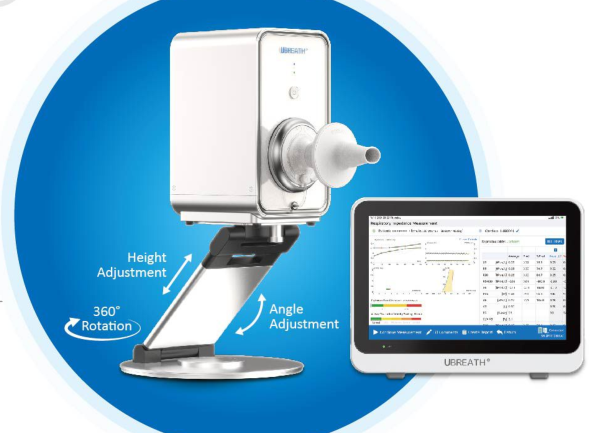
In the clinical world, Impulse Oscillometry (IOS) is a lung function testing technique that measures respiratory resistance and reactance while the patient breathes normally.
How It Works
IOS builds upon the Forced Oscillation Technique (FOT), first described by Dubois in 1956. During testing, an external signal source—typically a speaker—delivers tiny oscillating pressure waves (sound waves) to the patient’s mouth and nose during quiet tidal breathing. The system then measures the respiratory system’s "response" to these外加 signals, calculating respiratory impedance (Z)—essentially, how "hard" it is to breathe.
Key Parameters
| Parameter | Meaning |
|---|---|
| R5 | Total airway resistance at 5 Hz—the most important IOS indicator |
| R20 | Large airway (central) resistance at 20 Hz |
| R5–R20 | The difference—if elevated, indicates peripheral small airway obstruction |
| X5 | Reactance at 5 Hz—reflects lung elasticity; decreases in obstructive diseases |
| Z5 | Total impedance at 5 Hz—a composite measure |
Why It Matters
Unlike traditional spirometry, which requires forceful exhalation, IOS is effort-independent—patients simply breathe normally. This makes it invaluable for:
-
Young children who cannot perform forced maneuvers
-
Elderly or cognitively impaired patients
-
Asthma diagnosis and monitoring, particularly for peripheral airways
The entire test takes only a few minutes and evaluates total airway resistance, large and small airway resistance, and reactance under normal breathing conditions.
2. Display Pulse Smoothing: Tackling Screen Flicker
Starting with the iPhone 17 series, Apple introduced Display Pulse Smoothing—a feature designed to address eye strain caused by OLED screen flicker.
The PWM Problem
OLED displays adjust brightness using Pulse Width Modulation (PWM)—essentially turning the screen on and off at ultra-high speed to simulate dimming. At lower brightness levels, the flickering becomes slower, causing eye fatigue, headaches, and discomfort for sensitive users—even if they cannot consciously see the flicker.
The Solution
Display Pulse Smoothing disables PWM dimming and switches to an alternative method for reducing brightness at low light levels. This dramatically reduces the flickering sensation while maintaining visual quality.
How to Enable It
Settings → Accessibility → Display & Text Size → toggle Display Pulse Smoothing ON
Apple notes that while this may slightly affect low-brightness display performance in certain situations, the trade-off is a significantly more comfortable viewing experience.
3. Taptic Engine and Haptic Feedback: Precision Oscillations
Apple’s Taptic Engine is the hardware foundation for all haptic (vibration) feedback on iOS devices.
Hardware Innovation
Unlike traditional rotary motors, the Taptic Engine uses a Linear Resonant Actuator (LRA) with remarkable capabilities:
-
Response speed: Start/stop latency under 10 ms
-
Frequency control: Precise output across 100–300 Hz
-
Amplitude precision: Micrometer-level displacement adjustment
-
Low power consumption
First introduced in Apple Watch and later in iPhone 6s, it enabled Force Touch and 3D Touch interactions—where different press forces triggered corresponding haptic pulses.
Software Abstraction: UIFeedbackGenerator
Introduced in iOS 10, UIFeedbackGenerator provides semantic haptic feedback through three core subclasses:
| Generator | Purpose |
|---|---|
UIImpactFeedbackGenerator | Simulates physical collisions (button taps, drag events) with Light/Medium/Heavy styles |
UISelectionFeedbackGenerator | Optimized for selection events (PickerView scrolling, segmented control toggles) with short double-pulse design |
UINotificationFeedbackGenerator | System-level events (success/warning/error) with three-stage vibration sequences |
Design Philosophy
Apple’s haptic system follows strict human-factors engineering—each feedback type is carefully calibrated to convey consistent psychological perception across devices. The system also respects global accessibility settings and prevents apps from overusing the Taptic Engine.
4. Pulse Monitoring and Health Tracking
iOS devices have become surprisingly capable tools for monitoring pulse and heart health.
PPG Technology via Camera
Many iOS apps use the iPhone’s camera as a photoplethysmography (PPG) sensor. By placing a finger over the camera lens, the app detects subtle color changes in the fingertip caused by blood flow pulses, generating a real-time pulse waveform.
Research Applications
Open-source projects like OpenPPG enable high-quality PPG signal acquisition for research purposes, providing raw and filtered pulse waveforms across RGB channels. Researchers have even used iPhones to assess aortic arch pulse wave velocity—a marker of vascular health.
Apple Health Integration
iOS HealthKit includes symptom categories for rapid, pounding, or fluttering heartbeat, allowing users to log cardiac symptoms directly. Third-party apps can leverage this data alongside Apple Watch heart rate sensors for comprehensive health tracking.
5. Visual Pulse Animations in iOS Development
For developers, creating pulse animations is a common way to draw user attention or create engaging interfaces.
Core Animation and Replicator Layers
Using CAReplicatorLayer, developers can create animated pulsing effects—such as expanding, fading circles—commonly seen in map annotations or recording buttons. These pulses can be customized for number, speed, radius, transparency, and color.
Open-Source Libraries
Pulsator, a Swift library, creates heartbeat-like pulse effects by animating transparency and radius, making images appear to "breathe".
Summary
The concept of "pulse oscillation" in the iOS world spans:
-
Medical diagnostics (Impulse Oscillometry for lung function)
-
Display comfort (PWM elimination via Display Pulse Smoothing)
-
Haptic interaction (Taptic Engine precision vibrations)
-
Health monitoring (PPG-based pulse detection)
-
Visual design (pulse animations for UI engagement)
Each application leverages oscillation or pulsing in unique ways—yet all share a common goal: using precise, controlled pulses to measure, communicate, or enhance the user experience. Whether you’re a patient undergoing a lung function test, a user sensitive to screen flicker, or a developer crafting immersive feedback, pulse oscillations are quietly shaping how we interact with technology.