Asthma: The Rising Role of FeNO Testing in Modern Diagnosis
Asthma is one of the most common chronic respiratory conditions worldwide, affecting an estimated 260 million people globally. It is a lifelong condition characterized by chronic airway inflammation that makes breathing difficult. While asthma cannot be cured, it can be effectively managed—and the first and most critical step toward effective management is obtaining an accurate diagnosis. In recent years, a simple, non-invasive breath test called fractional exhaled nitric oxide (FeNO) has revolutionized how healthcare providers diagnose asthma, particularly in cases where traditional testing falls short.
What Is Asthma?
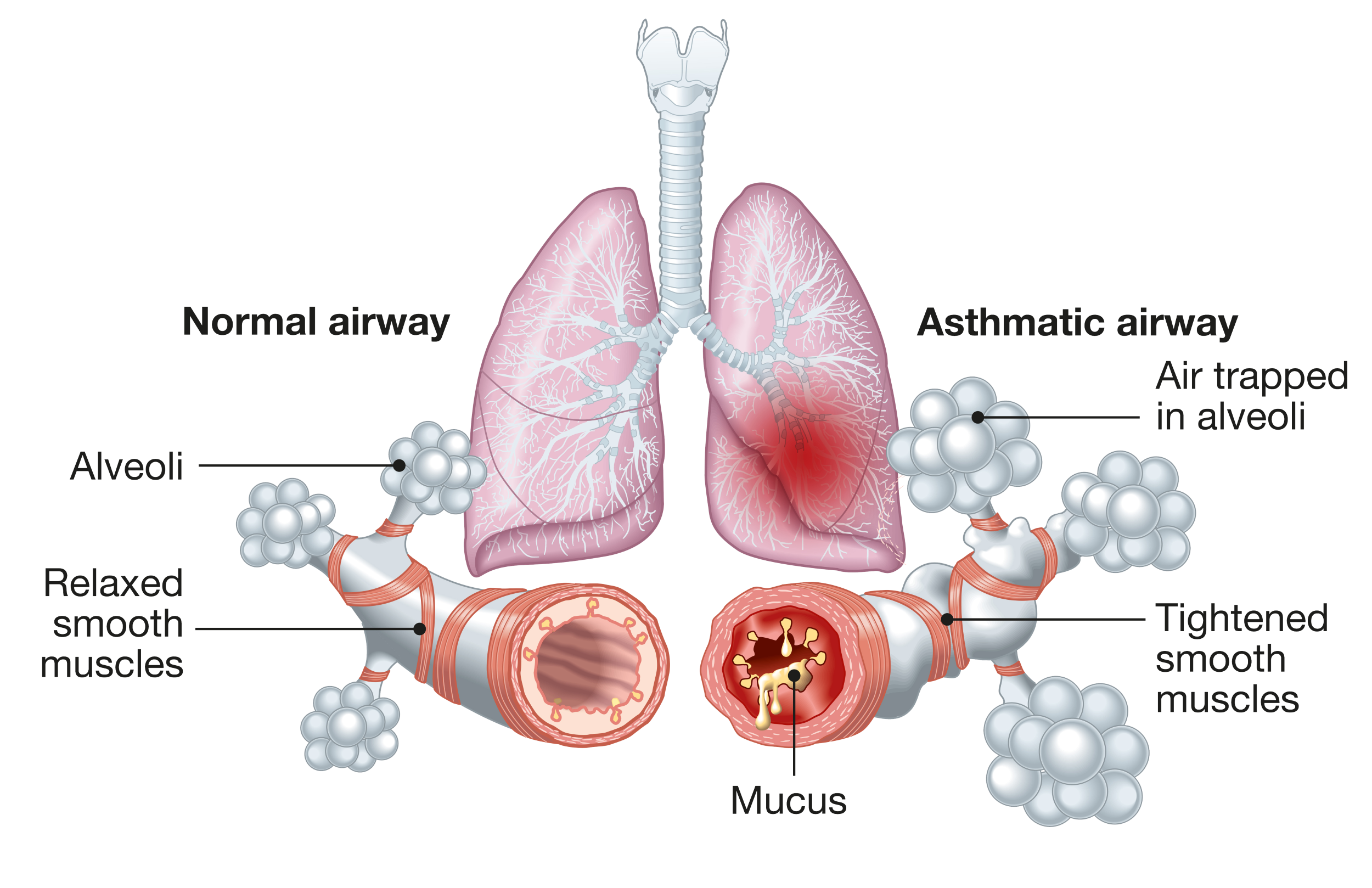
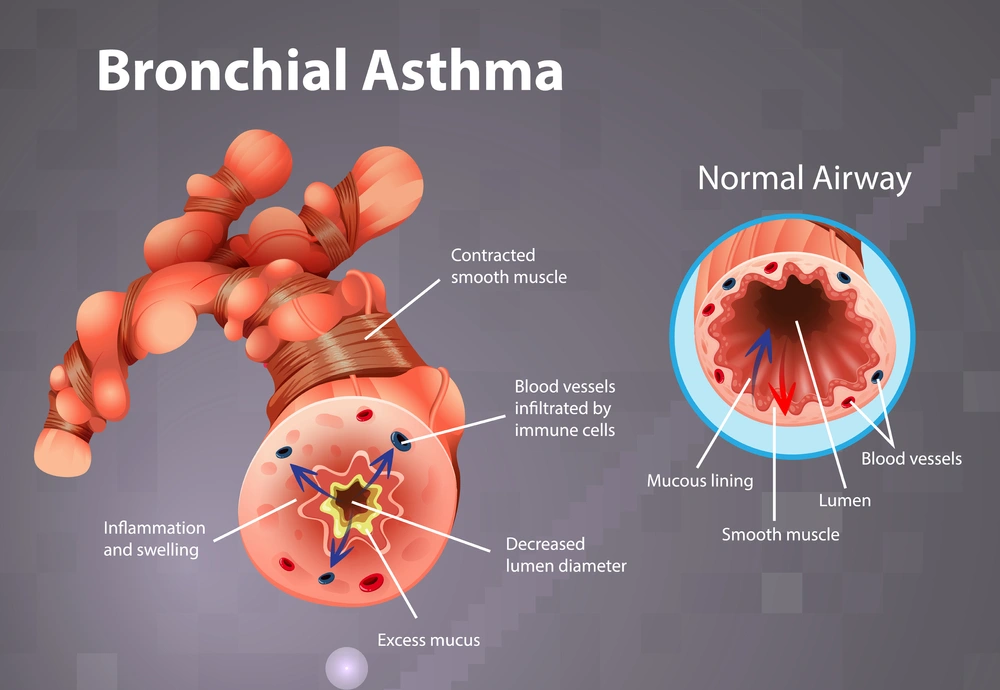
Asthma is a chronic inflammatory condition of the airways. In a person with asthma, the airways are hyper-responsive and constrict easily in response to various triggers. Two main problems occur: inflammation (swelling and increased mucus in the airways) and bronchospasm (squeezing of the muscles around the airways). These changes cause the airways to narrow, leading to symptoms that can range from mild to life-threatening.
The hallmark symptoms of asthma include:
-
Wheezing – a whistling sound when breathing
-
Coughing – often dry and occurring in harsh bursts
-
Shortness of breath (dyspnea)
-
Chest tightness or discomfort
These symptoms typically vary over time and in intensity, and they may be worse at night, early in the morning, or in response to specific triggers such as exercise, cold air, allergens, or respiratory infections.
The Challenge of Diagnosing Asthma
Diagnosing asthma has historically been challenging. The symptoms are non-specific and can overlap with those of other respiratory conditions, leading to frequent misdiagnosis. Traditionally, diagnosis has relied on a combination of medical history, physical examination, and lung function tests such as spirometry with bronchodilator reversibility testing. However, these tests have limitations:
-
Spirometry results can be normal even in people who have asthma.
-
Some patients—particularly children, the elderly, or those with mild or intermittent symptoms—cannot perform the forceful breathing maneuvers required for spirometry.
-
Access to specialized testing (such as bronchial challenge tests) is often limited.
These gaps have led to a growing recognition that measuring airway inflammation directly—rather than relying solely on tests of airflow obstruction—is essential for accurate diagnosis.
What Is FeNO Testing?
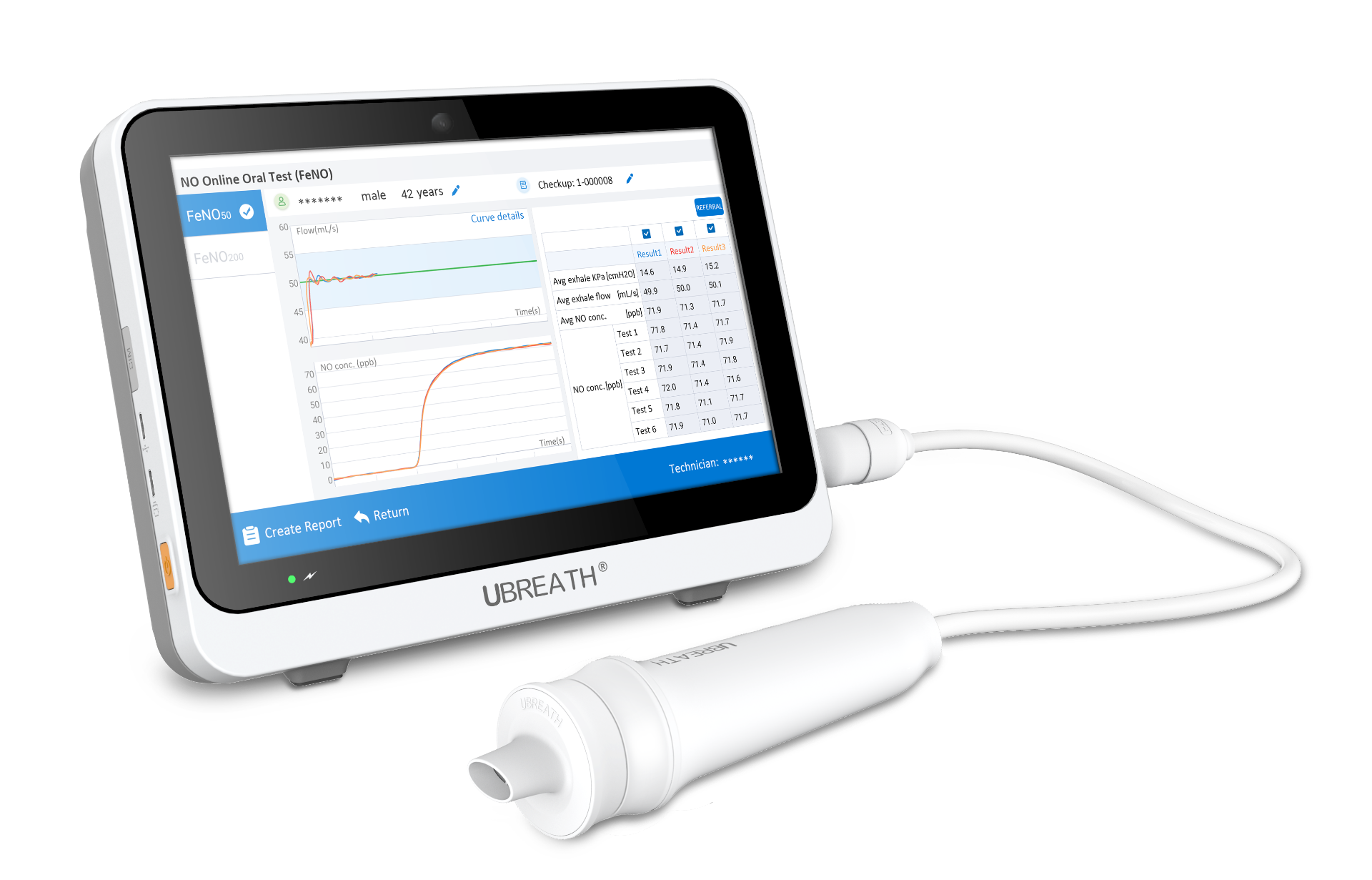
FeNO stands for fractional exhaled nitric oxide. It is a simple, non-invasive, and rapid point-of-care test that measures the concentration of nitric oxide (NO) gas in a person's exhaled breath.
Nitric oxide is produced by cells in the airways, particularly the epithelial cells that line the respiratory tract. When the airways are inflamed—as they are in asthma—the enzyme inducible nitric oxide synthase (iNOS) becomes more active, leading to the production of large amounts of nitric oxide. This nitric oxide is then exhaled and can be measured in parts per billion (ppb) using a portable FeNO device.
In essence, FeNO is a direct biomarker of airway inflammation, particularly the type of inflammation known as Type 2 (T2) inflammation or eosinophilic inflammation—the most common inflammatory pattern seen in asthma.
How FeNO Testing Fits into the Asthma Diagnostic Pathway
In recent years, major international guidelines have expanded the role of FeNO testing in asthma diagnosis. The 2025 Global Initiative for Asthma (GINA) guidelines now recognize FeNO as a valuable tool to support the diagnosis of Type 2 asthma. The guidelines state that if patients present with typical asthma symptoms but lung function testing is not available or yields normal results, an elevated FeNO value can support the diagnosis of Type 2 asthma.
Similarly, the updated joint guidelines from NICE, BTS, and SIGN (United Kingdom) have made FeNO testing the recommended initial test in the diagnostic pathway for both adults and children. This marks a significant shift away from starting with spirometry and toward first confirming the presence of airway inflammation.
Interpreting FeNO Results: What Do the Numbers Mean?
FeNO results are interpreted using established cut-off values. According to the 2025 GINA guidelines and other international consensus documents:
| Population | FeNO Level Suggestive of Asthma |
|---|---|
| Adults | ≥ 50 ppb |
| Children (aged 5–16) | ≥ 35 ppb |
Source: GINA 2025; NICE/BTS/SIGN guidelines
In adults, a FeNO score of 50 ppb or above—in the presence of a suggestive clinical history—is sufficient to confirm a diagnosis of asthma without the need for further testing. In children, a threshold of 35 ppb or above is used for diagnosis.
For context, normal FeNO levels in healthy adults are generally below 25 ppb, and below 20 ppb in healthy children. Levels between normal and diagnostic thresholds may be considered "borderline" and may warrant additional testing or clinical correlation.
Importantly, the guidelines also note that lower FeNO levels do not rule out asthma. Some people with asthma—particularly those with non-eosinophilic (non-Type 2) inflammation—may have normal FeNO levels. In such cases, other tests (such as spirometry with bronchodilator reversibility or peak flow variability) should be pursued.
The Stepwise Diagnostic Approach
The updated NICE/BTS/SIGN guidelines outline a clear stepwise diagnostic approach:
-
Step 1 – FeNO Testing: This is the recommended first-line test. If FeNO is elevated (≥50 ppb in adults, ≥35 ppb in children), asthma can be diagnosed without further testing.
-
Step 2 – Spirometry with Bronchodilator Reversibility: If FeNO is negative or unavailable, spirometry is performed to assess for reversible airflow obstruction. A reversibility of ≥12% and ≥200 mL in FEV1 supports the diagnosis.
-
Step 3 – Peak Expiratory Flow (PEF) Variability: If earlier tests are negative, PEF is measured twice daily for two weeks. Variability of ≥20% is diagnostic.
-
Step 4 – Bronchial Challenge Testing: If clinical suspicion remains high but all tests are negative, referral to a specialist for bronchial challenge testing is recommended.
Only one test needs to be positive to confirm a diagnosis of asthma.
Why FeNO Testing Is a Game-Changer
FeNO testing offers several distinct advantages in the diagnosis of asthma:
1. It measures the cause, not just the effect. Traditional tests like spirometry measure airflow obstruction—the consequence of inflammation. FeNO, by contrast, measures airway inflammation directly—the underlying problem. This allows for earlier and more specific diagnosis.
2. It is simple and non-invasive. The test requires only that the patient breathe out slowly and steadily into a handheld device for about 10 seconds. It does not require forceful exhalation, making it suitable for children, the elderly, and those who cannot perform spirometry.
3. It provides immediate results. FeNO testing produces a score within minutes, allowing for real-time clinical decision-making.
4. It reduces the need for multiple tests. In many cases, an elevated FeNO result alone is sufficient to confirm asthma, eliminating the need for further—and often more time-consuming—testing.
5. It improves diagnostic accuracy. Research has shown that FeNO testing has a high specificity for asthma, meaning that when the test is positive, it is very likely that the patient truly has asthma. In one study, 78% of asthma diagnoses made in a primary care setting were based on elevated FeNO alone.
6. It identifies patients who will respond to inhaled corticosteroids (ICS). Elevated FeNO indicates eosinophilic (Type 2) inflammation, which is highly responsive to ICS treatment. This helps guide personalized treatment from the very start.
Real-World Example: When Spirometry Isn't Enough
Consider the case of a woman in her 20s who had been struggling with a persistent cough and shortness of breath for several years. Despite repeated misdiagnoses—she was treated for chest infections with antibiotics and given short-term bronchodilators with only temporary relief—she had never received a formal asthma diagnosis.
Her spirometry results were completely normal. However, her peak flow diary showed significant variability, and a FeNO test returned a result of 126 ppb—far above the diagnostic threshold. This confirmed significant eosinophilic airway inflammation consistent with asthma. She was started on an inhaled corticosteroid, and within weeks her symptoms dramatically improved. A follow-up FeNO test showed that her nitric oxide levels had returned to normal, confirming that her airway inflammation was under control.
This case illustrates a critical point: normal spirometry does not rule out asthma. FeNO testing can provide the crucial evidence needed to make an accurate diagnosis when traditional tests fail.
Preparing for a FeNO Test
FeNO testing requires minimal preparation, but certain steps should be followed to ensure accurate results:
-
Avoid smoking for at least 1 hour before the test.
-
Avoid hot drinks, caffeine, and alcohol for at least 1 hour before the test.
-
Avoid strenuous exercise for at least 1 hour before the test.
-
Avoid nitrate-rich foods (such as celery, lettuce, spinach, cabbage, and beetroot) for at least 3 hours before the test, as these can temporarily elevate FeNO levels.
-
Patients can take their regular medications as normal before the test.
Limitations and Considerations
While FeNO testing is a powerful diagnostic tool, it is important to understand its limitations:
-
FeNO levels can be elevated in conditions other than asthma, such as allergic rhinitis or atopic dermatitis.
-
Lower FeNO levels do not rule out asthma. Some people with asthma have non-eosinophilic inflammation and will have normal FeNO levels.
-
FeNO levels are suppressed by inhaled or oral corticosteroids. For this reason, guidelines emphasize the importance of testing before starting corticosteroid treatment whenever possible.
-
Elevated FeNO may indicate poor adherence to prescribed corticosteroid treatment rather than uncontrolled disease.

What Happens After Diagnosis?
Once asthma is diagnosed—whether through FeNO testing, spirometry, or a combination of tests—your healthcare provider will work with you to develop a personalized treatment plan. Asthma treatment focuses on two main goals: controlling symptoms and preventing future exacerbations.
Treatment typically includes:
-
Daily controller medications (usually inhaled corticosteroids) to reduce airway inflammation
-
Quick-relief (rescue) medications to treat symptoms when they occur
-
Identifying and avoiding triggers
-
Following a written Asthma Action Plan
FeNO testing also plays a role after diagnosis, helping to monitor treatment response, assess adherence to therapy, and guide adjustments in medication.
Key Takeaways
-
Asthma is a chronic inflammatory condition of the airways, not just a problem of airflow obstruction
-
Traditional diagnostic tests like spirometry can be normal even in people with asthma
-
FeNO testing measures airway inflammation directly by detecting nitric oxide in exhaled breath
-
According to 2025 GINA and NICE/BTS/SIGN guidelines, FeNO is now a first-line diagnostic test for asthma
-
A FeNO level of ≥50 ppb in adults or ≥35 ppb in children—with a suggestive history—can confirm asthma
-
FeNO testing is simple, non-invasive, provides immediate results, and reduces the need for multiple tests
-
Normal FeNO does not rule out asthma; additional testing may be needed
-
Early and accurate diagnosis—often enabled by FeNO testing—is the first step toward effective asthma management
Final Word
If you or someone you know is experiencing breathing difficulties, recurrent coughing, wheezing, or chest tightness, don't wait. Speak with a healthcare provider. The diagnostic landscape for asthma has evolved significantly, and tools like FeNO testing are making it easier than ever to get an accurate diagnosis. Early diagnosis is the first step toward better breathing and a better quality of life.