World COPD Day 2026: Why “Early” Is the Most Important Word in Lung Health
November 18, 2026 marks the 25th World COPD Day. This year’s theme, led by the Global Initiative for Chronic Obstructive Lung Disease (GOLD), is “Early Diagnosis and Management for a Better Life.” The message is deliberately simple: chronic obstructive pulmonary disease (COPD) is a leading cause of death that remains dangerously under-recognized, and the single most powerful thing we can change is how soon we act.
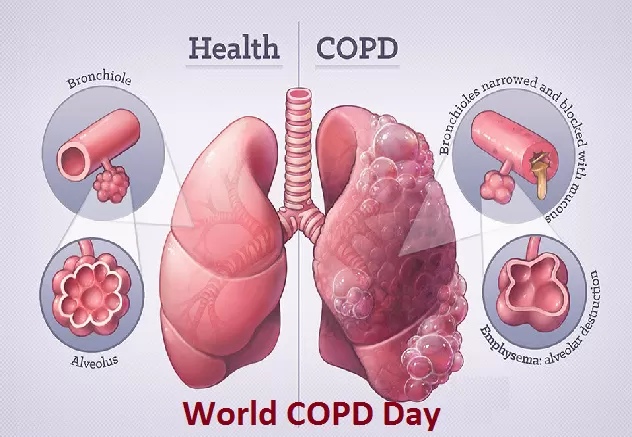
A Global Killer That Too Often Goes Unnamed
COPD claims roughly three million lives every year and is the third leading cause of death worldwide. Yet the numbers we see likely represent only the tip of the iceberg. GOLD 2026 estimates that up to 70% of adults with COPD globally remain undiagnosed, and in low- and middle-income countries the figure may be even higher. The disease is projected to grow substantially: by 2050, close to 600 million people are expected to be living with COPD, with the sharpest increases among women and in lower-resource regions.
Why does a disease this common stay so invisible? The reasons are layered. Patients often normalize a morning cough or attribute breathlessness to aging or being “out of shape.” Health systems may lack easy access to spirometry, the breathing test that confirms the diagnosis. And because symptoms can begin subtly—sometimes with no obvious warning at all—the disease is frequently discovered only after lung function has already declined substantially.
It Is Not Only a “Smoker’s Disease”
Tobacco remains the single most important cause: smoking accounts for over 70% of COPD cases in high-income countries and 30% to 40% in low- and middle-income countries. But the 2026 GOLD report explicitly broadens the conversation. Long-term exposure to outdoor air pollution, household air pollution from biomass fuels, and occupational dusts, fumes, and chemicals can all contribute to COPD, independent of smoking. Early-life factors—prematurity, childhood respiratory infections, and impaired lung growth—also shape the trajectory of lung function across a person’s lifetime.
This broader view matters for recognition. A person who never smoked but has cooked for years over biomass fuel, or worked in a dusty industrial setting, can develop COPD and may never be flagged as “at risk.”
The Warning Signs Worth Taking Seriously
The hallmark symptoms are easy to dismiss because they develop gradually:
-
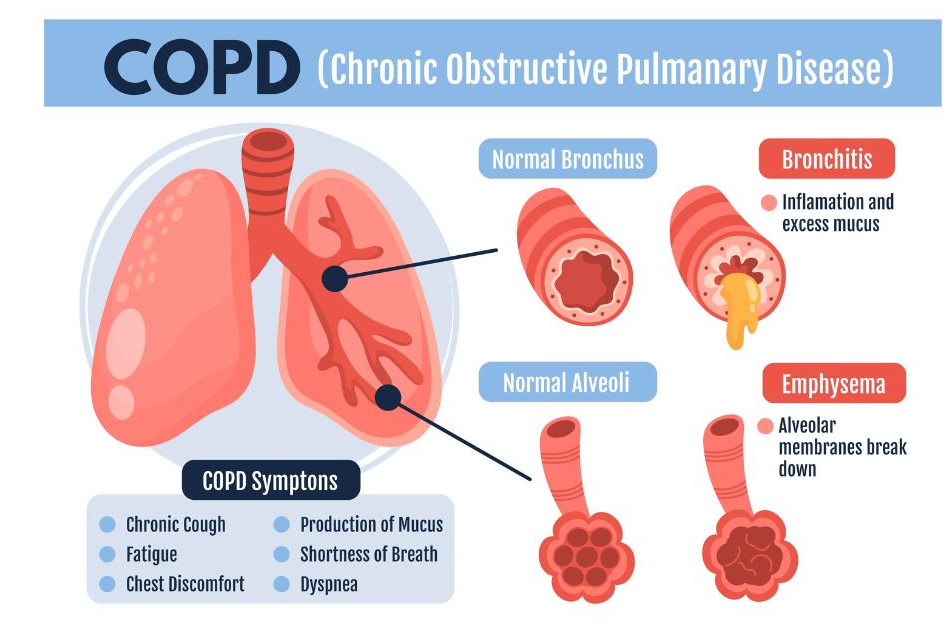
A chronic cough, often worst in the morning, sometimes with phlegm—frequently written off as a “smoker’s cough” or a normal part of aging.
-
Breathlessness that worsens over time—first with stairs or brisk walking, later with ordinary daily activities, and eventually at rest.
-
Wheezing, chest tightness, reduced exercise tolerance, and fatigue that seem out of proportion to fitness level.
GOLD 2026 emphasizes case-finding rather than mass screening: anyone aged 35 or older with risk-factor exposure—smoking, occupational exposures, air pollution, recurrent chest infections, or a family history of chronic lung disease—should be considered a candidate for spirometry, especially if any respiratory symptom is present.
Spirometry: The Test That Makes the Difference
The diagnosis of COPD still rests on spirometry showing persistent airflow limitation—specifically, a post-bronchodilator FEV₁/FVC ratio below 0.70 in a symptomatic person with compatible risk factors. Spirometry is inexpensive, non-invasive, and repeatable. The 2026 theme is a direct call to make this test far more accessible: in primary care, in community settings, and as part of routine assessment for anyone with suggestive symptoms or relevant exposure history. Without it, COPD remains a guess; with it, the disease gets a name, a stage, and a plan.
Management in 2026: Earlier, Broader, More Personalized
The 2026 GOLD strategy reflects a meaningful shift in how COPD is managed, and much of it reinforces the “earlier is better” message.
Pharmacological treatment starts with dual bronchodilation as the preferred initial therapy for most symptomatic patients, rather than stepping up slowly from a single agent. For patients who continue to have exacerbations despite optimized bronchodilation, biomarker-guided triple therapy—adding an inhaled corticosteroid, guided in part by blood eosinophil counts—is an option, and GOLD 2026 for the first time includes biologic therapies (dupilumab and mepolizumab) for selected patients with exacerbation-prone eosinophilic COPD. The ABE assessment tool has also been refined: even one moderate exacerbation now places a patient in the higher-risk Group E, signaling that earlier treatment escalation should be considered.
Non-pharmacological care has been elevated to a core disease-modifying strategy, not a supportive afterthought. This includes smoking cessation (the single most effective intervention at any stage), pulmonary rehabilitation, vaccination (annual influenza; RSV vaccine now recommended from age 50 in GOLD 2026; pneumococcal and other vaccines per local guidance), structured self-management education, and post-exacerbation care to reduce the cycle of repeat hospitalizations.
What You Can Do—Starting Now
The 2026 World COPD Day message is not only for clinicians. It is a prompt for anyone who has ever wondered whether their breathlessness is “just age” or their cough is “just smoking.”
If you are 35 or older and have smoked, lived or worked around lung irritants, or noticed a cough or breathlessness that is not going away, ask for a spirometry test. Early diagnosis does not change the fact that COPD is a chronic disease, but it changes the trajectory. Starting the right inhaled therapy, stopping smoking, getting vaccinated, and beginning pulmonary rehabilitation earlier can preserve lung function, reduce exacerbations, and keep daily life—walks, stairs, work, time with family—within reach for longer.
COPD has no cure. But the gap between a late diagnosis and an early one is not just a number on a breathing test. It is years of breath, function, and independence. That is why, in 2026, the most important word in COPD care is early.
References
-
Global Initiative for Chronic Obstructive Lung Disease (GOLD). Early Diagnosis and Management for a Better Life. World COPD Day 2026 Press Release.
-
American Thoracic Society / Forum of International Respiratory Societies. COPD: Early Diagnosis and Management for a Better Life. November 18, 2026.
-
GOLD. Global Strategy for the Diagnosis, Management, and Prevention of COPD: 2026 Report—Key Changes Summary.
-
Hillas G, Gogali A, Loukides S, Kostikas K. GOLD 2026 Report: What Is New and What Is Noteworthy for the Practicing Clinician. COPD: Journal of Chronic Obstructive Pulmonary Disease. 2026.
-
BMJ Best Practice. Overview of Chronic Obstructive Pulmonary Disease (COPD). Updated November 2026.
-
GOLD 2026: Transforming COPD Management with Early Intervention, Multi-dimensional Assessment, and Personalized Care. Drugs. 2026;86:581–597.